Acne Clusters on the Face: Why They Occur and How to Treat Them
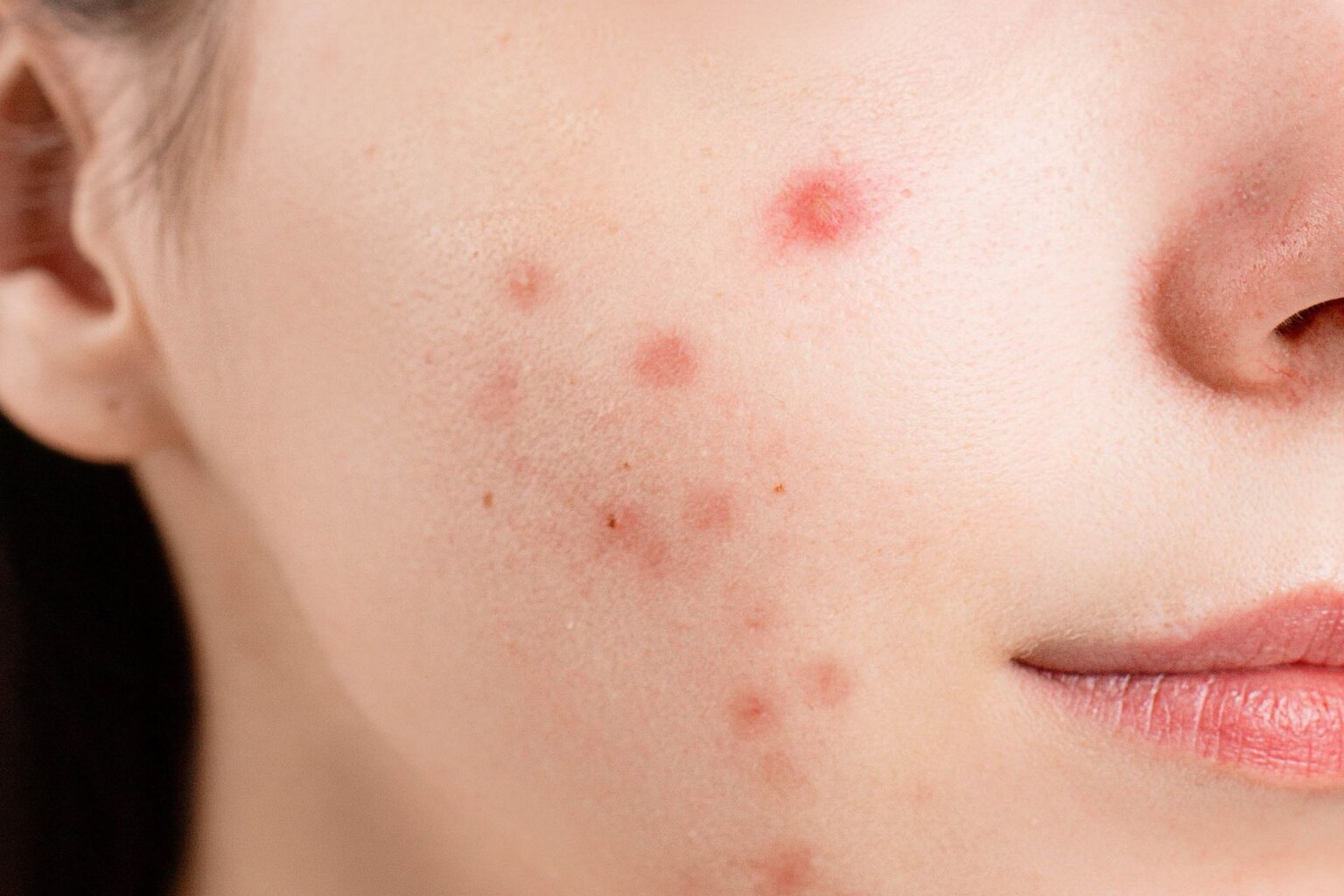
An acne cluster is a group of closely packed pimples, pustules, or cysts in one localized area rather than isolated spots. They develop when inflammation from one blocked follicle spreads to neighboring pores, often triggered by picking, friction, hormonal shifts, or trapped debris. Understanding why clusters form, and resisting the urge to squeeze them, is the first step toward clearing them without scarring.
What a Cluster Actually Looks Like
Clusters vary by cause. Some are small, uniform, surface-level; others are deep, tender, cyst-like.
| Cluster Type | Typical Location | Appearance | Main Trigger |
| Small red bumps | Forehead, cheeks | Superficial, inflamed, often uniform | Product buildup, sweat, friction |
| Closed comedones | Forehead, chin | Flesh-colored or white tiny bumps | Occlusive skincare, excess oil |
| Deep tender cysts | Jawline, chin, lower cheeks | Large, painful, under the skin | Hormonal fluctuations |
| Pustule groupings | Around mouth, nose | Red base with visible white center | Bacterial spread from picking |
Why Clusters Form in One Spot
Skin in a specific area shares a network of hair follicles and sebaceous glands. When one follicle becomes inflamed, surrounding tissue swells and can compress adjacent pores, creating a domino effect where nearby follicles also become blocked. Squeezing a blemish worsens this by rupturing the pore wall beneath the skin, pushing bacteria and debris sideways into neighboring follicles. One pimple becomes a cluster within days.
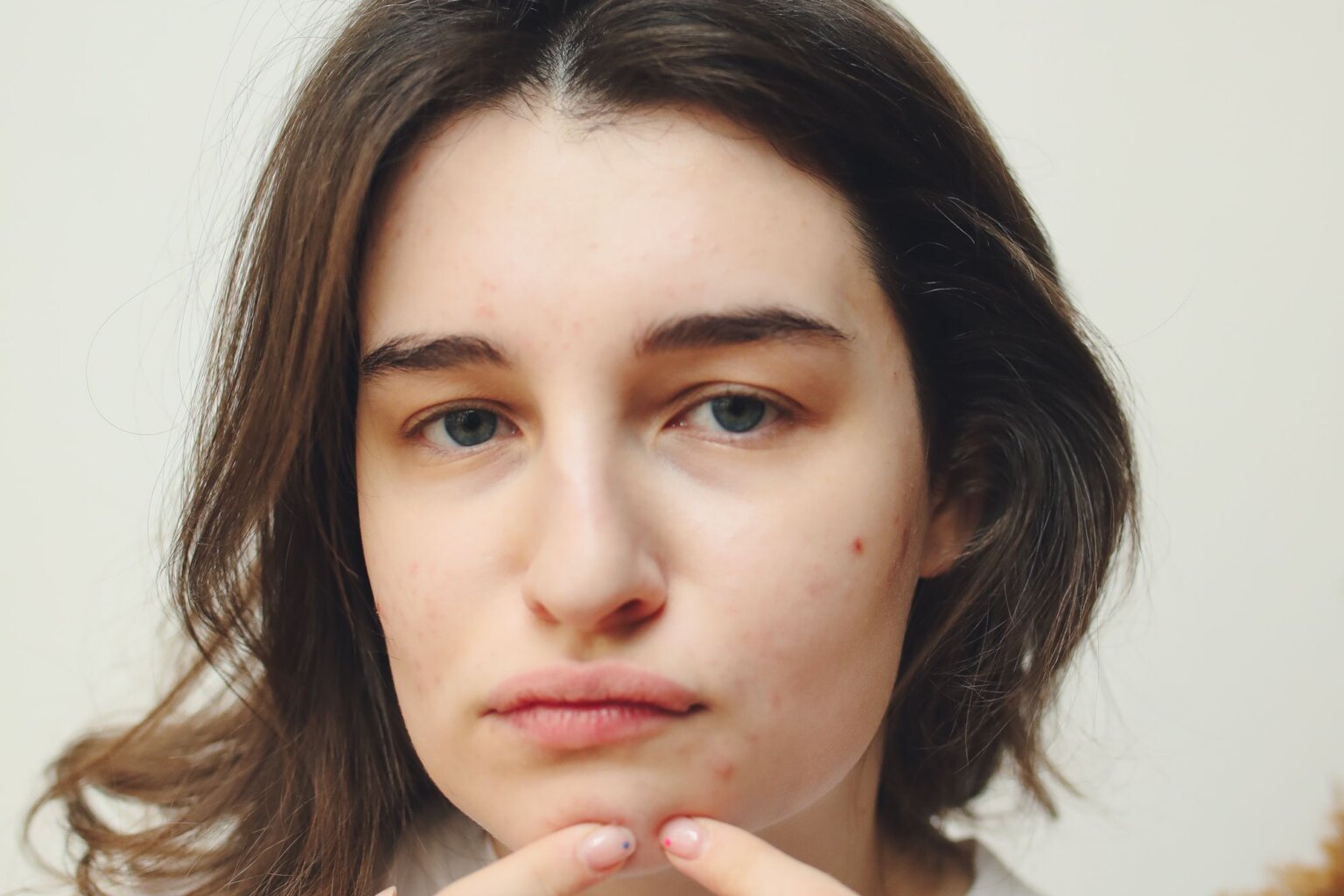
Friction and pressure play an underappreciated role. Cell phones pressed against the cheek, chin straps from helmets, tight collars, and resting your face on your hand drive oil and bacteria deeper into dense networks of facial pores. Dermatologists call this acne mechanica, and it commonly produces clusters on one side of the face or along a strap line.
Hormonal fluctuations are another major trigger. Deep, tender cysts frequently group along the lower face, chin, and jawline. These clusters often flare cyclically and may link to conditions like polycystic ovary syndrome, where hormonal imbalances drive excess oil production and inflammation.
What a PCOS-Related Cluster Looks Like
Acne associated with PCOS tends to appear as deep, painful bumps concentrated along the lower third of the face, especially the jawline, chin, and sometimes the neck. The bumps are often red, inflamed, and slow to come to a head. They may leave behind dark marks or an acne scar even without picking. If clusters in this area are accompanied by irregular periods, hair thinning on the scalp, or excess facial hair, a hormonal evaluation is worth discussing with a clinician.
Pustules Versus Whiteheads
A whitehead is a closed comedone, a blocked pore with a thin layer of skin covering trapped oil and dead cells. It appears as a small white or flesh-colored bump and is not inflamed. A pustule is what most people think of as a classic pimple: a red, inflamed bump with a visible white or yellow center of pus. Pustules form when bacteria multiply inside a blocked pore and the immune system responds. Squeezing a whitehead can turn it into a pustule, and squeezing a pustule can spread infection into a cluster.
Treatment: What Works and What Backfires
The first rule is to leave the area alone. Picking at any blemish in a cluster risks spreading bacteria into adjacent follicles and increasing the chance of permanent scarring. This is especially important for deep, nodular groupings where inflammation sits far below the surface.
Over-the-counter options can help for surface-level clusters. Salicylic acid penetrates oil and clears debris from inside the pore, making it useful for comedonal clusters. Benzoyl peroxide targets the bacteria that drive inflamed pustules. Using both ingredients, one in a cleanser and one as a spot treatment, can address different parts of the breakout without over-drying the skin.
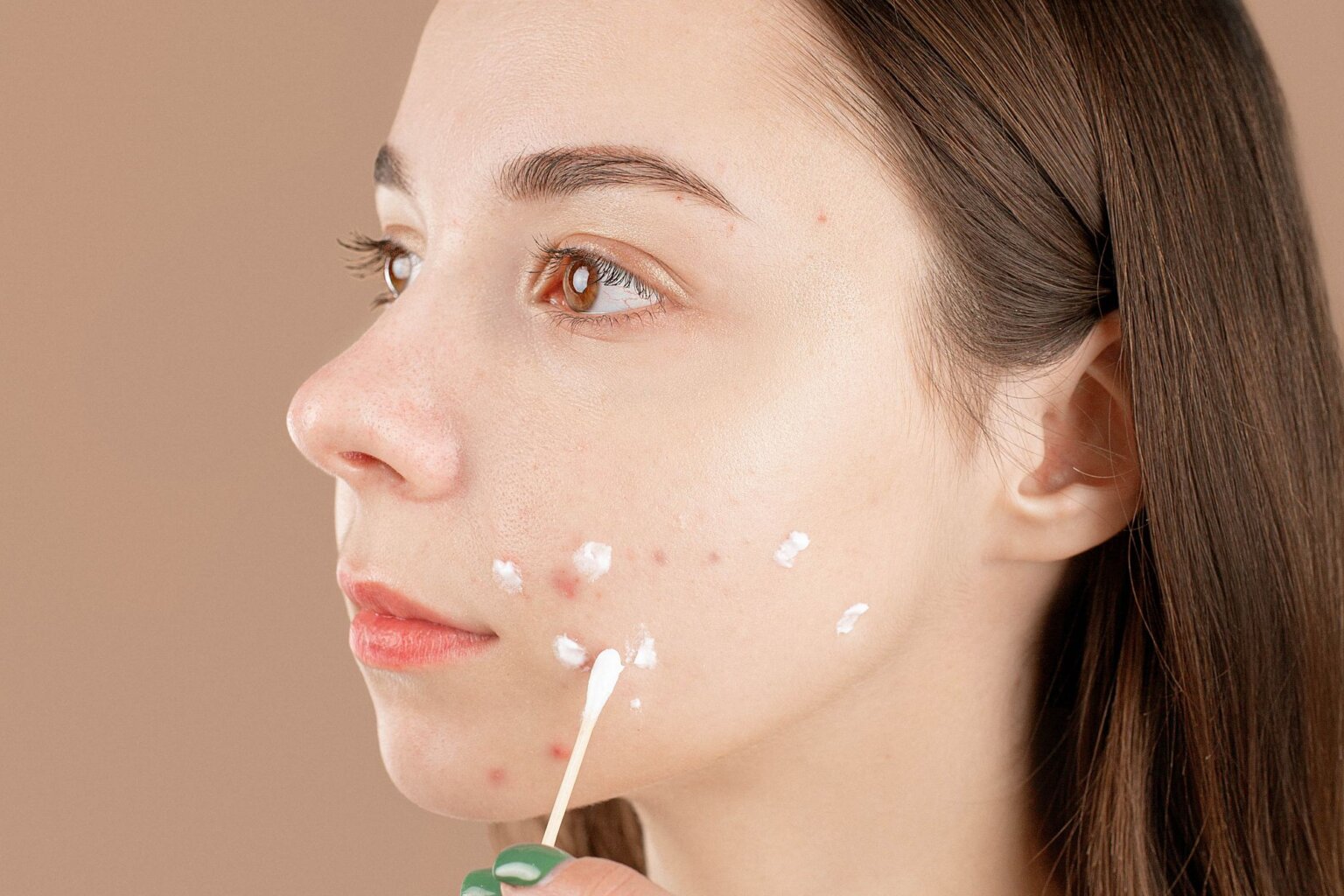
For clusters that keep returning or sit deep under the skin, prescription treatment is often more effective. Topical retinoids help normalize cell turnover and prevent pores from clogging in the first place. Oral medications may be needed for hormonal clusters, especially those along the jawline that do not respond to topicals alone. A dermatologist can assess whether the pattern points to hormonal acne, bacterial overgrowth, or something else entirely.
Common Mistakes That Make Clusters Worse
- Popping or squeezing any bump in the cluster, which spreads debris under the skin
- Applying thick, occlusive products over an active cluster, trapping oil and bacteria
- Over-exfoliating in an attempt to dry out the area, which damages the skin barrier and increases inflammation
- Using multiple harsh acne treatments at once without moisturizing, leading to irritation that mimics more breakouts
- Assuming every cluster is hormonal when friction, product buildup, or bacterial spread is the true cause
When to See a Professional
Clusters that are deep, painful, recurrent, or leaving marks deserve professional attention. A dermatologist can identify whether the cluster is comedonal, inflammatory, or nodulocystic, and tailor treatment accordingly. Some treatments, like cortisone injections for large inflamed cysts, can flatten a lesion within days and reduce the risk of an acne scar. Others, like prescription retinoids or hormonal therapy, address the underlying process rather than just the visible bumps.
For those also concerned about the aftermath of repeated breakouts, clinics such as tlc skyn clinic offer assessments that look at the whole picture, including acne, acne scar management, open pores, and related skin concerns like tanning, skin tag removal, and anti ageing. A professional evaluation can clarify whether the cluster is a one-off event or part of a broader pattern that needs a longer-term strategy.
What You Can Do Today
Stop touching the area. Wash once or twice daily with a gentle cleanser, apply a targeted treatment with salicylic acid or benzoyl peroxide, and use a light, non-comedogenic moisturizer to keep the skin barrier intact. If the cluster sits along the jawline or lower face and feels deep and tender, track when it appears in relation to your cycle. That information helps a clinician determine whether hormonal treatment is appropriate. If the cluster persists beyond a few weeks, spreads, or becomes painful, seek professional care rather than escalating at-home treatments.
Frequently Asked Questions
What is the difference between pustule acne and whiteheads?
A whitehead is a closed comedone, a blocked pore with trapped oil and dead skin cells under a thin layer of skin. It is not inflamed and appears as a small white or flesh-colored bump. A pustule is inflamed and contains pus, showing a red base with a white or yellow center. Pustules result from bacterial overgrowth inside a blocked pore and an immune response, while whiteheads are primarily a buildup problem.
What does a PCOS pimple look like?
PCOS-related acne typically appears as deep, tender, inflamed bumps along the jawline, chin, and lower cheeks. The lesions are often red, slow to come to a head, and may leave dark marks or scars. They tend to flare cyclically and are frequently accompanied by other signs of hormonal imbalance such as irregular periods or excess facial hair.
What could be causing a cluster of small pimples on my skin?
Clusters of small pimples are commonly caused by friction and pressure, such as from a cell phone, helmet strap, or resting your face on your hand. Product buildup from occlusive skincare or hair products can also block nearby pores simultaneously. In some cases, picking at one blemish spreads bacteria to adjacent follicles, creating a cluster where there was previously a single spot.
Is it okay to pop forehead acne?
No. Popping any pimple, including on the forehead, can rupture the pore wall beneath the skin and push bacteria and debris into surrounding follicles. This often turns a single blemish into a cluster and increases the risk of scarring. Forehead skin is also prone to post-inflammatory dark marks, which can linger long after the pimple itself has healed.