Childhood Eczema
Gentle, dermatologist-led eczema care for babies and children in Kollam.
Book a consultation
Tell us your name and the conversation continues on WhatsApp.
Prefer to talk now? +91 9072 80 66 55
Watch
Every skin has
a story.
Every plan at TLC Skyn starts with the person, not the procedure.
Book a consultationChildhood eczema, or atopic dermatitis, is a chronic inflammatory skin condition causing dry, itchy, red patches, most often on cheeks, scalp, and outer arms in babies and in elbow and knee creases in older children. It is not contagious and cannot be permanently cured, but can be managed with consistent skin care and the right treatment. In Kollam’s humid, warm climate, flares happen during sweaty summer months and unusually dry spells, so the approach must fit the season.
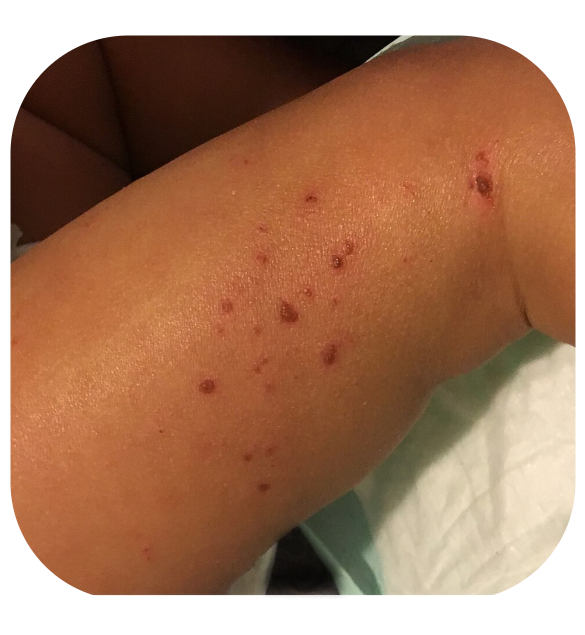
For children who also struggle with acne during adolescence, eczema and acne need different care, and products meant for one can worsen the other.
How Childhood Eczema Behaves
Eczema is driven partly by a weaker skin barrier. Many affected children have lower levels of filaggrin, a protein that helps skin hold moisture and keep irritants out. When the barrier fails, allergens and microbes get in, and the immune system overreacts with inflammation and itching. A family history of eczema, asthma, or hay fever raises the risk.
The pattern changes with age. Infants get red, rough patches on the face and outer limbs. Toddlers and school-age children show thickened, dry skin in elbow and knee creases, wrists, and ankles. Some children outgrow eczema; a smaller group continues into adulthood.
What Triggers Flares in Kollam
| Trigger | How It Affects Eczema | Practical Adjustment |
|---|---|---|
| Heat and sweat | Sweat irritates broken skin and drives itching | Light cotton clothing, cool baths after play |
| Hard or chlorinated water | Strips natural oils from the barrier | Short lukewarm baths, pat dry, moisturise immediately |
| Scented soaps and detergents | Fragrances and harsh surfactants inflame skin | Use mild, fragrance-free cleansers and rinse laundry well |
| Dust and pollen | Common allergens that can worsen flares | Damp-mop floors, wash bedding in hot water weekly |
| Stress | Raises inflammation and scratching | Predictable routines, good sleep, gentle redirection |
The Core Treatment: Moisturise, Medicate, Maintain
The foundation of eczema care is moisturising. A thick, fragrance-free cream or ointment applied at least twice a day, and always within three minutes after bathing, keeps the barrier intact. Lotions are often too thin for eczema-prone skin. In Kollam’s humidity, a cream may feel more comfortable than a heavy ointment, but during drier months an ointment works better.
For active flares, topical corticosteroids remain the most common and effective prescription treatment. They are grouped into seven potency levels, from very mild to very strong, and the choice depends on the child’s age, the body part affected, and flare severity. Mild steroids are used on the face and skin folds; stronger ones are reserved for thick skin on the palms, soles, or stubborn patches, and only for short periods. A common mistake is stopping the steroid too early, which lets the flare return.
Newer non-steroid options include topical calcineurin inhibitors and topical JAK inhibitors, useful for sensitive areas or when steroid use needs to be limited. For moderate to severe eczema that does not respond to creams alone, dermatologists may consider systemic treatments, including oral JAK inhibitors or biologics. These are not first-line choices for mild cases and need specialist supervision.
- Keep nails short and filed to reduce damage from scratching.
- Bathe once daily in lukewarm water for five to ten minutes, then pat dry and apply moisturiser immediately.
- Dress children in soft cotton; avoid wool and rough synthetic fabrics directly on the skin.
- Use a mild, fragrance-free cleanser only on dirty areas, not all over the body every day.
- Watch for signs of infection: weeping, crusting, or sudden worsening. Eczema herpeticum, a serious viral infection, shows as painful blisters and needs urgent medical attention.
When to See a Dermatologist
Many families manage mild eczema with a primary care doctor, but a dermatologist helps when flares are frequent, sleep is disturbed, or standard creams are not enough. At TLC Skyn, the focus is on building a routine that works for a child’s specific skin and for Kollam’s climate, rather than a one-size-fits-all plan. The clinic also handles related concerns such as acne scar management, open pores, tanning from sun exposure, skin tag removal, and anti ageing care for adults, so families often find continuity of care in one place.
What Parents Can Do This Week
Start by simplifying the routine. One gentle cleanser, one thick moisturiser, and any prescribed medication used exactly as directed. Stop using scented wipes, bubble baths, and fabric softeners. Track when flares happen, after certain foods, heat, or stress, and share that pattern with the doctor. Eczema care is not about finding a single miracle product; it is about consistent, boring, daily care that protects the barrier and treats flares early before they spiral.
Frequently Asked Questions
I have eczema and I can’t stop scratching. What can I do to stop this?
Scratching worsens eczema by breaking the skin and triggering more inflammation. Keep nails short, use cool compresses on itchy areas, and apply moisturiser or a prescribed anti-itch cream when the urge hits. At night, cotton gloves or mittens can help younger children. If itching is severe and constant, the underlying flare likely needs stronger treatment, so see a dermatologist.
How does cortisol affect eczema?
Cortisol is a stress hormone that can increase inflammation and weaken the skin barrier, making flares more likely during stressful periods. This is why eczema often worsens around exams, family changes, or sleep loss. Managing stress through routine, rest, and calm activities is part of eczema care, though it does not replace medical treatment.
How can I treat stress-related eczema on my hands?
Hand eczema triggered by stress responds to the same basics: a fragrance-free moisturiser after every hand wash, lukewarm water instead of hot, and a prescribed topical steroid or non-steroid cream for flares. Wearing cotton-lined gloves for wet work helps. If stress is a clear trigger, addressing sleep and reducing unnecessary pressure matters as much as the creams.
What are some effective eczema management strategies and treatments for flare-ups?
Effective flare management combines daily moisturising, short lukewarm baths, avoiding known triggers, and using prescribed topical steroids or non-steroid creams at the first sign of redness or itching. For stubborn cases, a dermatologist may recommend topical JAK inhibitors, phototherapy, or systemic medications. The key is treating early and consistently, not waiting until the skin is raw and weeping.