Call Us: +91 9072 80 66 55
A changing mole can be stressful, especially when you are not sure whether it is harmless or needs medical attention. Mole excision is a commonly recommended procedure when a mole is suspicious, irritated, painful, frequently bleeding, or simply in a location that gets repeatedly rubbed by clothing. At TLC Skyn, we focus on careful assessment, safe technique, and clear aftercare so you know what to expect before, during, and after your mole excision appointment.
Mole excision is a minor surgical procedure used for mole removal by taking the mole out from the skin with appropriate margins when needed. In many cases, surgical mole excision is chosen because it removes the full depth of the mole, which can be important for accurate evaluation if there is any concern about atypical changes.
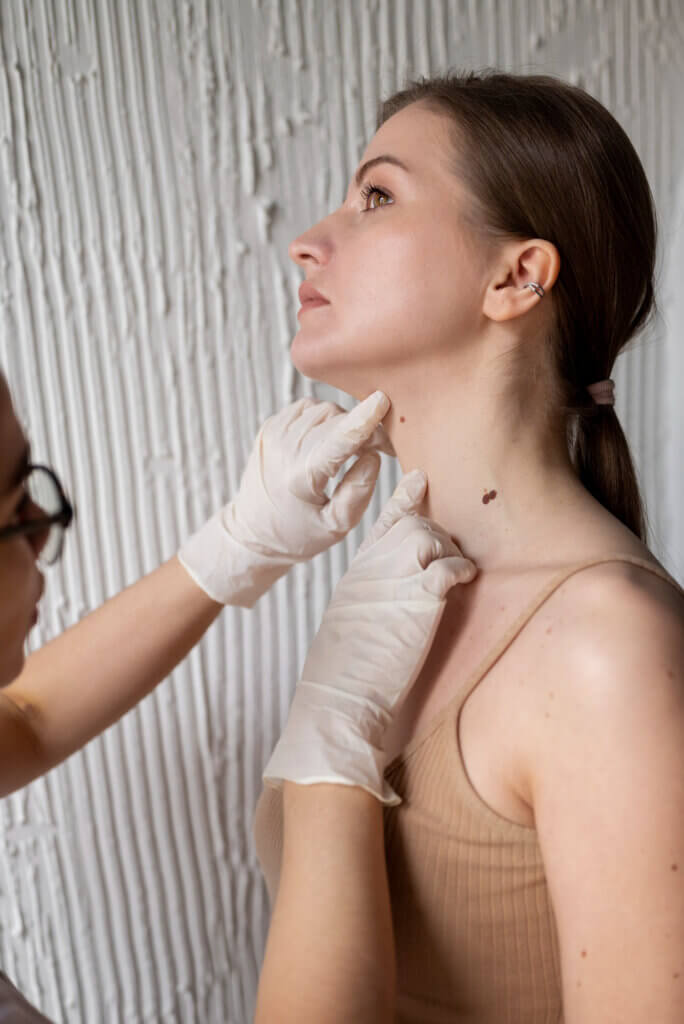
A clinician may recommend mole excision surgery for moles that look unusual, have changed in size, shape, or color, or have symptoms like itching, tenderness, crusting, or bleeding. Depending on the clinical assessment, the removed tissue may be sent for laboratory testing to confirm the diagnosis.
Choosing where to have a mole excision matters because technique and follow up directly affect healing and scarring. TLC Skyn prioritizes a methodical clinical approach, including an in person evaluation of the mole and surrounding skin, a discussion of your medical history, and clear guidance on wound care.
If you are specifically searching for mole excision in Kollam or mole excision in Kerala, TLC Skyn aims to provide a local option where safety, hygiene standards, and patient understanding are central to the experience.
Mole excision can be beneficial for both medical and practical reasons. Some people seek mole removal treatment because a mole keeps catching on jewelry or clothing, while others are referred because a mole needs closer evaluation.
Common benefits of mole excision include:
A typical mole excision visit starts with an assessment. The clinician reviews the mole’s history, including when you first noticed it, whether it has changed, and whether there are any symptoms. The area is examined carefully, and the approach for mole removal is explained in straightforward terms.
During mole excision surgery, the skin is cleaned and a local anesthetic is used to numb the area. The mole is then removed using an appropriate method for its type and depth. The wound may be closed with stitches when needed, and a dressing is applied.
After your mole excision, you receive aftercare instructions focused on keeping the area clean, watching for signs of infection, and supporting good scar healing. Follow up is advised based on the mole type, closure method, and whether the sample is sent for testing.
Mole excision is considered for a wide range of patients and concerns. You may benefit from mole excision if:
If you are unsure whether you need mole excision or another form of mole removal treatment, an in person evaluation is the safest next step.
Every mole is different, and the best plan depends on factors like size, depth, location, and your skin type. TLC Skyn takes a personalized approach to mole excision by matching the removal technique and closure plan to the clinical goal, whether that goal is complete removal, symptom relief, or obtaining a sample for further evaluation.
We also consider practical details that influence outcomes, including your daily activities, your tendency toward scarring, and how easy it will be for you to follow wound care instructions at home.
Most people can return to routine tasks soon after mole excision, depending on the site and closure. It is normal to have mild tenderness and a healing scab or a stitched incision. The main goals in the first days are keeping the area clean, avoiding friction, and following the instructions provided.
For best results after mole excision, avoid self applying harsh creams or home remedies on the wound unless they are specifically recommended. If you notice increasing redness, swelling, warmth, discharge, fever, or worsening pain, seek medical advice promptly.

Let’s check who we are associated with.