Birthmarks
Book a consultation
Tell us your name and the conversation continues on WhatsApp.
Prefer to talk now? +91 9072 80 66 55
Watch
Every skin has
a story.
Every plan at TLC Skyn starts with the person, not the procedure.
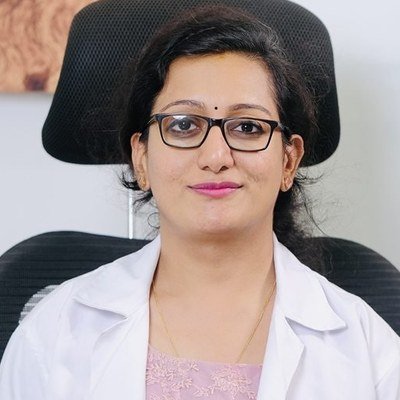
Book a consultationMedically reviewed by Dr Swathy Krishna S (MBBS, DDVL), Consultant Dermatologist, TLC Skyn, Kollam.
A birthmark is a coloured or raised irregularity on the skin present at birth or appearing within the first month. Most are harmless, painless, and need no treatment. Some deserve a closer look, especially when they change, grow, or sit in a sensitive area.
Parents in Kollam often notice these marks during the first few weeks at home. Most infant birthmarks fall into predictable categories, and a dermatologist can usually identify them quickly by examining the skin.
Types of Birthmarks Parents Commonly See
Doctors divide birthmarks into two groups: vascular birthmarks, caused by abnormal or increased blood vessels, and pigmented birthmarks, caused by clusters of pigment-producing cells.
| Type | Category | Appearance | Typical Behaviour |
|---|---|---|---|
| Salmon patch (stork bite, angel’s kiss) | Vascular | Flat, pink or red, often on the nape, eyelids, or forehead | Usually fades within the first year or two |
| Infantile hemangioma | Vascular | Raised, red or bluish, may look like a strawberry | Grows for a few months, then slowly shrinks over years |
| Café au lait spot | Pigmented | Flat, light brown, oval | Stays stable; multiple spots may need evaluation |
| Congenital melanocytic nevus | Pigmented | Brown, sometimes hairy, may be small or large | Stays for life; larger ones need monitoring |
Salmon patches are among the most common. A red or pink mark on the back of the neck is often called a stork bite, and the same mark on the eyelid or forehead is sometimes called an angel’s kiss. These are flat, harmless, and typically fade without treatment.
Infantile hemangiomas may not be visible at birth, then appear as a small red bump in the first weeks and grow noticeably over several months. After that growth phase, most begin to shrink slowly on their own. Many resolve well, but some leave behind loose skin, a pale patch, or a slight contour change, especially if they were large or ulcerated.
Pigmented birthmarks include café au lait spots, which are flat and light brown, and congenital melanocytic nevi, which are brown and sometimes hairy. Small congenital moles are present in about 1 percent of all newborn babies, while giant congenital moles are rare.
What Causes Birthmarks
Most birthmarks are not inherited in a simple way, and they are not caused by anything a mother did during pregnancy. Vascular birthmarks result from blood vessels forming differently in the skin. Pigmented birthmarks result from clusters of melanocytes, the cells that give skin its colour. The exact reason some infants develop them is still not fully understood.
When to See a Dermatologist
Many birthmarks need no treatment, but Dr Swathy Krishna S recommends a dermatologist review when any of these apply:
- A hemangioma is growing quickly, especially near the eye, nose, mouth, or diaper area
- The surface breaks open, bleeds, or forms a crust
- A child has several café au lait spots
- A mole is large, changing, or causing concern
- The mark affects movement, feeding, breathing, or vision
A thorough consultation helps distinguish a harmless mark from one that needs monitoring. For families who cannot visit in person, TLC Skyn offers online and WhatsApp consultations with weekly monitoring, so location is not a barrier to getting a first opinion.
Treatment Options
Treatment depends on the type of birthmark, its location, and how it is behaving. Many salmon patches and small hemangiomas are simply observed. For hemangiomas that threaten function or are growing aggressively, a dermatologist may discuss medical treatment or laser therapy. Pigmented nevi may be monitored over time, and some can be removed surgically if there is a medical reason.
At TLC Skyn, the approach is step-by-step and honest. Dr Swathy Krishna S takes time to understand the child’s history before recommending anything, and prescribes only what is actually needed. Aleena shared, “Finally I found a dermatologist I can trust,” after her consultation.
Home Care for Birthmarks
- Keep the area clean and dry, especially if the skin is raised or in a fold
- Avoid rubbing or scratching hemangiomas
- Use a gentle, fragrance-free cleanser and pat dry
- Protect the area from sun, as pigmented marks can darken with UV exposure
- Take a photo once a month to track any change in size or colour
Monthly photos give the dermatologist an objective record, which matters more than memory when deciding whether a mark is stable.
Frequently Asked Questions
What are some examples of birthmarks?
Common examples include salmon patches, infantile hemangiomas, café au lait spots, and congenital melanocytic nevi. Each looks different and behaves differently, which is why a proper diagnosis matters.
What does a red birthmark on the back of the neck mean?
This is usually a salmon patch, often called a stork bite. It is a flat collection of small blood vessels, is harmless, and typically fades during early childhood.
Are birthmarks genetic?
Most birthmarks are not passed down in a predictable genetic pattern. Some conditions that include multiple birthmarks can run in families, but a single common birthmark is not usually inherited.
What is the rarest birthmark?
Giant congenital melanocytic nevi are rare, found in fewer than one in 20,000 newborn infants. These large pigmented marks need specialist follow-up because of their size and long-term considerations.
Can birthmarks be removed?
Some can be treated or removed when there is a medical reason, such as a hemangioma affecting vision or a mole that needs monitoring. Many birthmarks need no treatment at all. A dermatologist can explain which options are appropriate for a specific child.
If you are unsure about a mark on your child’s skin, book a consultation with Dr Swathy Krishna S at TLC Skyn. A single careful assessment can replace months of worry.