Pigmentation
Dark patches that appear on the skin is termed pigmentation.
Book a consultation
Tell us your name and the conversation continues on WhatsApp.
Prefer to talk now? +91 9072 80 66 55
Watch
Every skin has
a story.
Every plan at TLC Skyn starts with the person, not the procedure.
Book a consultationDark patches that appear on the skin is termed pigmentation. If not treated on time it can spread all over the skin leading to serious issues.
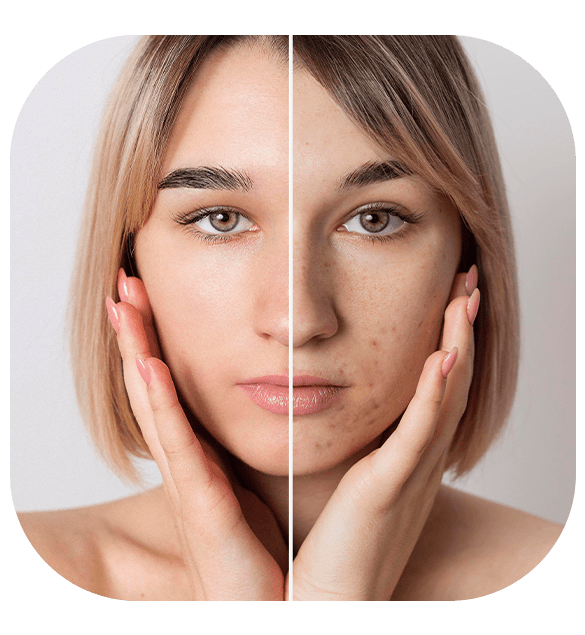
Pigmentation or Hyperpigmentation is caused as a result of excess melanin production, mostly due to acne scars or any severe sun burn or hormonal imbalances. The dark patches of the skin eventually get bigger and shapeless. Hence it should be treated well and on-time. This is in fact a common skin condition, and there are a number of different treatment options available.
Pigmentation rarely fades on its own and without treatment, dark patches tend to deepen with continued sun exposure, especially in Kerala’s climate. Treating pigmentation early prevents this progression and reduces the chance of permanent discolouration. Many of our patients find that results go beyond clearer skin: if you have been managing acne scars alongside pigmentation, treating both together often produces a more balanced, even skin tone than targeting one condition at a time.
Pigmentation often appears alongside other skin concerns. At TLC Skyn, we treat the full picture not just isolated symptoms. Explore related conditions:
Melasma · Dark Circles · Tan Removal · Acne · Open Pores · Anti-Ageing
Treatment Options & Advantages
Lightening Creams
Doctors suggest lightening creams at first. It helps decrease pigmentation and are usually applied once or twice a day to help lighten the skin.
Skin Acids
While you apply any skin acid or face acids, the top layer of your skin exfoliates making it free from dark patches. It happens after new skin cells emerge in the place of old ones.
Retinoids
Using retinoids help treat the layers below your epidermis. They reduce epidermal melanin and gives a clear, patch free skin.
Chemical Peels
Using chemical peel helps to treat the desired area of skin. They decrease the advent of hyperpigmentation by eradicating the epidermis. You can get a professional-grade peel that your dermatologist suggest.
Laser Peel
A laser peel, also known as resurfacing treatment uses light beams to reduce hyperpigmentation. Two types of lasers are used: ablative and non-ablative. While ablative lasers are intense, non-ablative procedures target the dermis to indorse collagen growth and tightening effects.
Intense Pulse Light Therapy
IPL therapy is a kind of laser treatment. It is done to stimulate collagen growth within the dermis. It usually requires multiple sessions.
- Provides a glowing skin
- It reduces the pore size
- It treats melasma and also helps in regulating acne scars
- Preventing Acne Marks
Frequently Asked Questions
How can I remove pigmentation permanently?
Key methods include Pico or Q-switched laser therapy, chemical peels, and prescription-strength topical creams (like hydroquinone or retinoids)
Is pigmentation permanent?
Hyperpigmentation is generally not permanent, but it is often chronic and can last for months, years, or indefinitely if left untreated.
Which food should I avoid for pigmentation?
To reduce skin pigmentation and melasma, avoid high-glycemic foods (white bread, sugar), processed snacks, dairy, fried items, and excessive alcohol/caffeine.
Can skin pigmentation go away?
Yes, skin pigmentation can go away or fade, but it often requires time, consistent treatment, and, most importantly, sun protection.