Curettage & Cautery
Book a consultation
Tell us your name and the conversation continues on WhatsApp.
Prefer to talk now? +91 9072 80 66 55
Watch
Every skin has
a story.
Every plan at TLC Skyn starts with the person, not the procedure.
Book a consultationGot a skin tag that keeps catching on your necklace, or a wart that’s been sitting there for months? These are usually easy to deal with. Curettage and cautery is one of the oldest and most reliable ways to remove small skin growths – a quick, in-clinic procedure that’s been used in dermatology for decades because it simply works.
At TLC SKYN in Kollam, we use this technique for a wide range of benign lesions, usually finishing the whole thing in one visit with local anesthesia and no stitches involved.
What Is Curettage & Cautery?
It’s a two-part procedure. First, curettage: the dermatologist uses a small spoon-shaped instrument (a curette) to scrape away the growth, layer by layer, until only healthy skin is left. Then comes cautery – heat or an electric current is applied to the base to stop any bleeding and clean up any cells that might cause the growth to come back.
Doing both together is what makes this approach efficient. There’s no cutting in the traditional surgical sense, recovery is short, and stitches aren’t usually needed since the treated area is shallow.
It works best on growths that sit close to the surface. Anything deeper or larger is usually a better fit for a different technique.
What It’s Used For
Some of the more common reasons people come in for curettage and cautery:
- Skin tags
- Warts
- Seborrheic keratosis – those raised, slightly rough patches that tend to show up with age
- Dermatosis papulosa nigra (small dark bumps often seen on the face and neck)
- Molluscum contagiosum
If a growth looks unusual, is changing shape or color, or sits deeper under the skin, curettage and cautery probably isn’t the right call – something likemole excision, sebaceous cyst excision, or lipoma excision would be more appropriate. That’s exactly what the consultation is for.
What to Expect
Anesthesia: A local numbing injection or cream is applied first, so you shouldn’t feel much beyond a bit of pressure.
Time: Most single lesions take just a few minutes. No operating room, no general anesthesia – you’re in and out the same day.
Recovery: A small scab forms over the area and usually clears up on its own within one to two weeks. Most people go straight back to their normal routine, just keeping the spot out of direct sun and away from friction while it heals.
Possible side effects: Some redness, a small scab, or a temporary change in skin tone at the site – lighter or darker than the surrounding skin. This usually settles down over the following weeks, though how much depends on the size and location of what was removed.
Is This the Right Treatment for You?
Curettage and cautery tends to make sense if:
- You’ve got a small, benign growth that’s been checked and confirmed safe to remove
- It’s bothering you – catching on clothes, jewelry, or getting nicked while shaving
- You’d rather avoid a longer procedure or downtime
- A dermatologist has already ruled out the need for excision or biopsy
At the consultation, we look at the size, texture, and location of the lesion, and ask how long it’s been there and whether it’s changed recently. That’s usually enough to confirm curettage and cautery is the right fit rather than something like mole excision.
How It Works, Step by Step
Assessment. We start by examining the growth to confirm what it is and rule out anything that needs a biopsy or a different surgical approach.
Numbing. Once we’ve confirmed curettage and cautery is appropriate, the area is cleaned and numbed.
Scraping (curettage). The growth is removed with a sterile curette, taken out layer by layer.
Sealing (cautery). Heat is applied to the base to control bleeding and lower the chance of regrowth.
Aftercare. You leave with clear instructions on cleaning the area and protecting it while it heals.
Why Patients Choose TLC SKYN
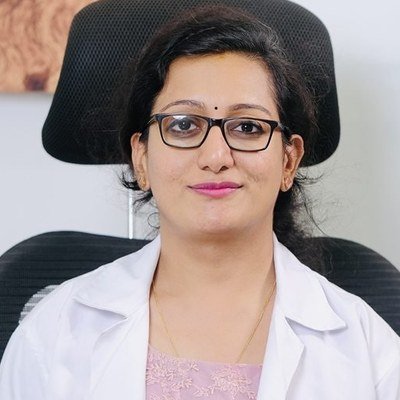
Not every bump needs the same treatment, and that’s really the starting point of how we approach this at TLC SKYN – getting the assessment right before reaching for any instrument. Procedures are carried out under the dermatology team led by Dr. Swathy Krishna, with a focus on doing this cleanly the first time.
A few things patients tend to mention:
- Same-day evaluation and treatment for most benign growths
- A proper check to rule out anything that needs biopsy or excision instead
- Attention to technique that keeps scarring to a minimum
- Straightforward aftercare instructions, not vague advice
What You Get Out of It
- A quick procedure without general anesthesia
- Little to no downtime – most people are back to normal the same day
- A reliable way to deal with skin tags, warts, and similar growths
- One less thing catching on your clothes, jewelry, or razor
- Results you can see right away, with full healing over the next week or two
After the Procedure
The area will scab over – leave it alone and let it fall off naturally rather than picking at it, which is really the main thing that affects how it heals. Keep it clean, stay out of direct sun, and use any ointment we recommend.
Some redness or a change in skin tone is normal in the first few weeks and usually fades with time. If the growth comes back in the same spot, come in for a quick follow-up and we’ll figure out the next step.
Book a Consultation
Got a skin tag, wart, or small growth you want looked at? A consultation at TLC SKYN in Kollam will tell you whether curettage and cautery is the right fit and what healing looks like for your specific case.
Does curettage and cautery hurt?
Not much – the area is numbed beforehand, so most people feel pressure at most. Some tenderness for a day or two afterward is normal.
Will it leave a scar?
Usually not, or barely noticeable. It depends on how big the growth was and where it sat.
How long until it’s fully healed?
The scab typically clears in one to two weeks. Any redness or color change can take a bit longer to fade completely.
How is this different from excision surgery?
Curettage and cautery is for growths sitting near the surface. Excision – used for things like moles, sebaceous cysts, or lipomas – is for lesions that go deeper.
Can more than one growth be treated at once?
Yes. If you’ve got several small skin tags or warts, we can usually clear them all in the same visit.