

Iron Deficiency Female Pattern Hair Loss: Causes, Diagnosis & Treatment
It usually starts with the parting. You notice it looks a little wider than it used to, or the ponytail feels thinner in your hand, and you tell yourself it’s stress, or the water, or the season. Sometimes it is. But for a lot of women, two things are quietly happening at once: female pattern hair loss and low iron. Iron deficiency female pattern hair loss is a mouthful of a phrase, but it describes one of the most common combinations we see at TLC Skyn. The good news? Both halves of the problem can be treated. You just have to find them first.
What is female pattern hair loss, exactly?
The medical name is androgenetic alopecia, and it’s the most common type of hair loss in women. It runs on genetics and hormones. Not your shampoo, not your oiling schedule, not that one time you bleached your hair in college. The follicles slowly shrink, and each new hair that grows out of them comes in a little finer and shorter than the last. What you end up seeing is a widening centre parting and less volume on top, while the front hairline mostly stays put. Most women first notice it in their thirties or forties, and it can pick up speed around menopause once oestrogen drops.
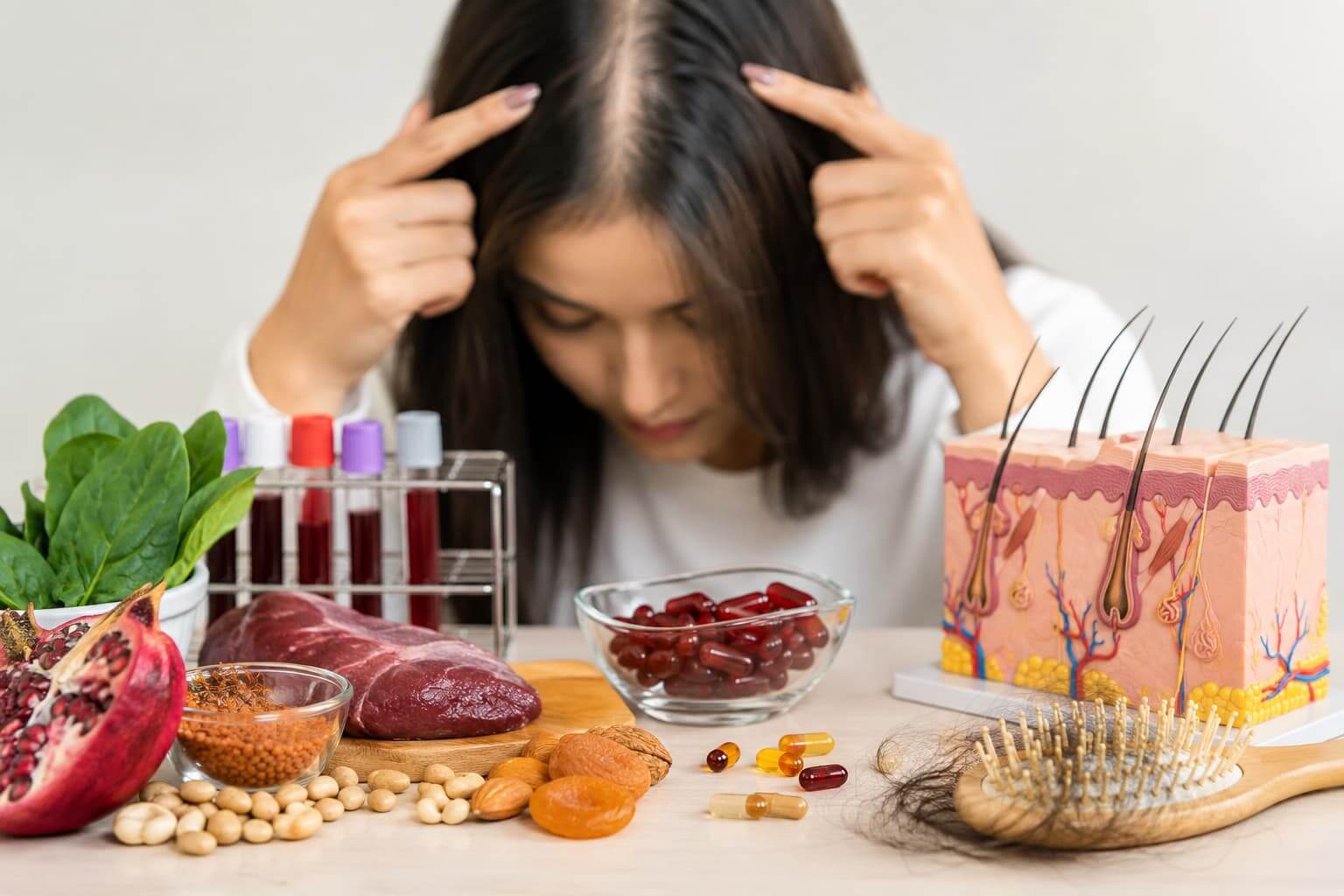
So where does iron come in?
Let’s be straight about this: low iron doesn’t cause the pattern. That part is genetic, written long before you were born. What iron deficiency does is pour fuel on it.
Hair follicle cells divide faster than almost anything else in your body, and all that activity needs iron. When stores run low, the body makes a quiet executive decision. Heart, brain, muscles get first claim. Hair can wait. So shedding goes up, regrowth comes in thinner, and treatments like minoxidil underperform because the follicles are basically running on empty. Fix the iron, and the same treatments suddenly start pulling their weight.
Why this hits Indian women so hard
Going by national family health surveys, more than half of Indian women of reproductive age are anaemic. Plenty more have depleted iron stores without being technically anaemic, which is its own trap. The usual suspects:
- Heavy or long menstrual periods
- Pregnancy and breastfeeding, which drain the reserves
- Mostly vegetarian diets (plant iron is genuinely harder to absorb)
- Tea or coffee with meals… this one surprises people, but it blocks iron absorption
- Gut issues that stop you absorbing what you eat
If a few of those sound like your life and your hair has been thinning for months, get the iron checked before you spend another rupee on serums.
Signs worth paying attention to
On the hair side: the parting slowly widening, a skinnier ponytail, scalp showing through under bright light, shedding that’s gone past the three month mark. And if you’ve been blaming the rain, we wrote about monsoon hair fall separately, because the season gets more blame than it deserves.
On the iron side: tired all the time, out of breath on the stairs, pale skin or pale inner eyelids, nails that chip and break, frequent headaches, and (this one sounds odd but it’s real) craving ice. Most women write all this off as ordinary exhaustion. Life is tiring, fair enough. But stack these next to hair fall and you have a pattern that deserves a blood test.
How it’s actually diagnosed
Two parts. A scalp exam and blood work. Neither one works alone.
In the clinic, the dermatologist looks at where the thinning sits and often uses trichoscopy, which is basically a magnified look at your follicles, to check for miniaturisation. That’s the fingerprint of pattern hair loss.
The blood test that matters most is serum ferritin, your stored iron. Here’s the catch that trips up nearly everyone: your haemoglobin can be perfectly normal while your ferritin is scraping the bottom. A basic blood count will happily tell you you’re fine. You’re not. Thyroid, B12 and vitamin D usually get tested in the same sitting, because these deficiencies love travelling together and each one can cause shedding all on its own.
Treating it: both problems, at the same time
Fix only the iron, or only the pattern, and you get half a result. So the plan runs on two tracks.
The iron track. Oral iron as prescribed, taken with something vitamin C rich (lemon water works, so does amla) to help it absorb. Keep tea, coffee and calcium tablets at least two hours away from the dose, since they fight with iron. If heavy periods are the leak, that needs sorting too, or you’ll be back where you started within a year. Ferritin gets rechecked around the three month mark.
The pattern track. Minoxidil is still the first-line treatment for female pattern baldness, and it honestly works better once your iron is back up. Women who want more density on top of that can look at GFC treatment, which uses growth factors concentrated from your own blood to push weakened follicles along. The exact plan depends on how far things have progressed, what the labs say, and what you actually want.
One thing we’d rather tell you now than have you discover at month two: hair is slow. Shedding settles over three to six months. Visible density comes after that. Boring consistency wins here, every time.
Food that actually helps
Iron from animal sources absorbs best. Chicken, fish, red meat, eggs. Vegetarian? Lean on dark leafy greens, legumes, dates and jaggery, and always pair them with something vitamin C rich like guava, citrus or tomatoes. Even shifting your chai an hour away from lunch makes a real difference over months. Small habit, real payoff.
When to come see us
If the parting is clearly wider, the shedding has crossed three months, or the tiredness and hair fall showed up together, stop waiting for it to fix itself. At TLC Skyn in Kollam, Dr. Swathy Krishna checks the scalp properly, orders the right blood work, and treats the deficiency and the pattern side by side instead of guessing. Book a consultation or call +91 9072 80 66 55.
FREQUENTLY ASKED QUESTIONS
Can iron deficiency alone cause female pattern hair loss?
No. The pattern itself is genetic and hormonal. Low iron just makes it shed faster, grow back thinner, and respond worse to treatment. Which is why we fix it anyway.
What ferritin level should I be aiming for?
Lab “normal” ranges are set for detecting anaemia, not for growing hair. Many dermatologists want ferritin comfortably above 40 to 50 ng/mL in women with hair loss. Your doctor will set your number.
How long before my hair improves once the iron is fixed?
Shedding usually eases within three to six months. Density takes longer. Don’t judge the plan at week six.
Can I just start iron tablets on my own?
Please don’t. Too much iron damages the liver and heart, and blind supplementing can hide other problems. Test first, then take what’s prescribed.