How to Reduce Melasma on Face: Causes, Effective Treatments and Prevention Tips
Medically reviewed by Dr Swathy Krishna S (MBBS, DDVL), Consultant Dermatologist, TLC Skyn, Kollam.
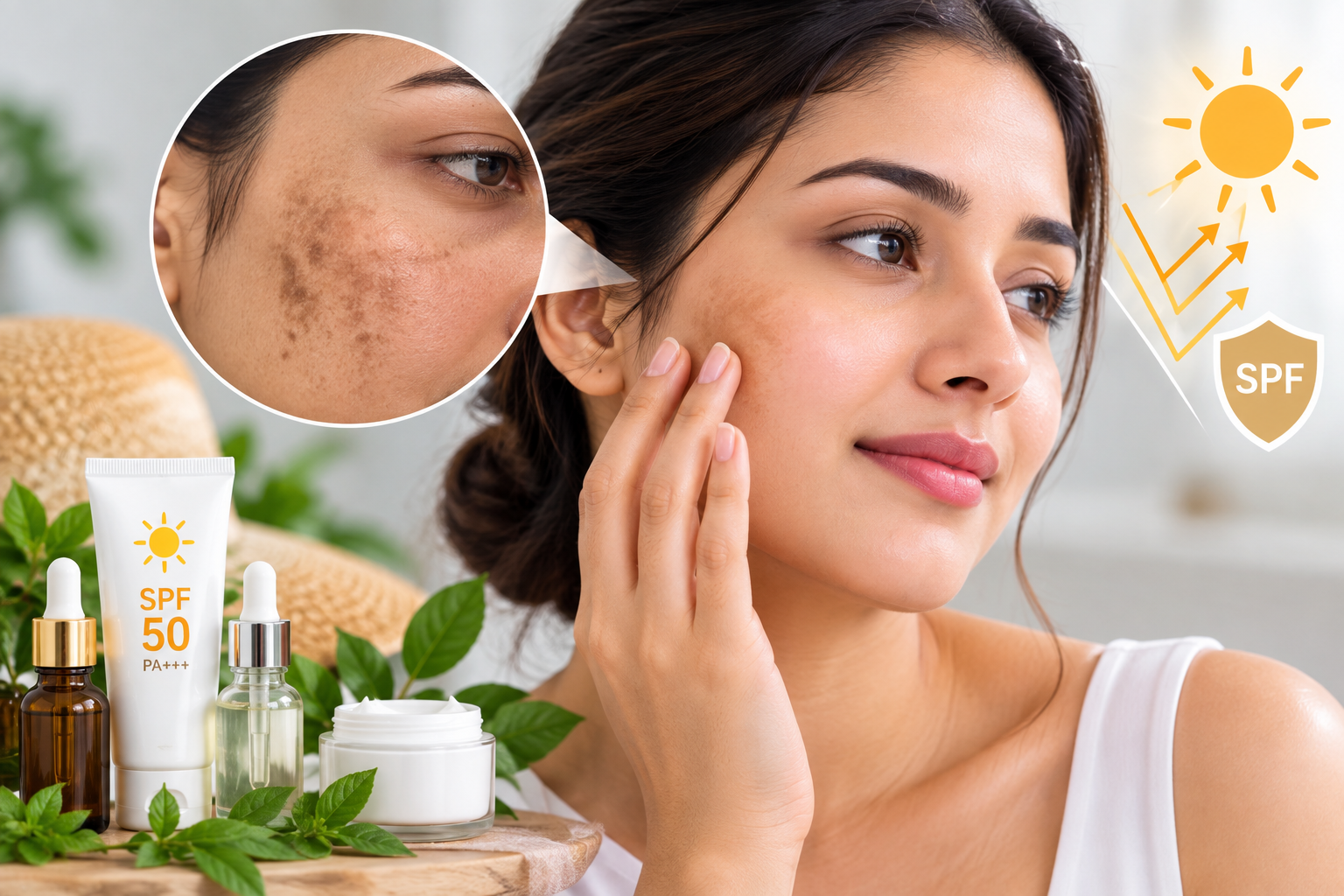
Reducing melasma on the face starts with strict sun protection, targeted pigment-inhibiting ingredients, and professional treatments that suit melanin-rich skin. Melasma is a chronic pigmentation condition, so the realistic goal is steady fading and long-term control rather than a one-time cure. The fastest results usually come from combining a dermatologist-guided routine with in-clinic procedures, but the order matters: protect first, treat second, and never chase quick fixes that inflame the skin.
What Melasma Actually Needs: A Practical Starting Point
| Priority | What to do | Why it matters |
| Daily | Broad-spectrum SPF 30 or higher, ideally tinted mineral sunscreen with iron oxide | Blocks UV and visible light, both of which deepen melasma |
| Daily | Gentle cleanser, no scrubs or harsh actives layered carelessly | Irritation triggers more pigment in Indian skin tones |
| Weekly to monthly | Dermatologist-supervised peels or laser toning | Removes existing pigment and slows new pigment formation |
| Ongoing | Identify and manage hormonal or heat triggers | Prevents recurrence even after successful fading |
Melasma often overlaps with other concerns people search for, such as acne, acne scar marks, open pores, tanning, skin tag removal, and anti ageing changes. A dermatologist can separate these issues because treating melasma aggressively while acne is active can worsen pigmentation.
Why Melasma Appears and What Keeps It Going
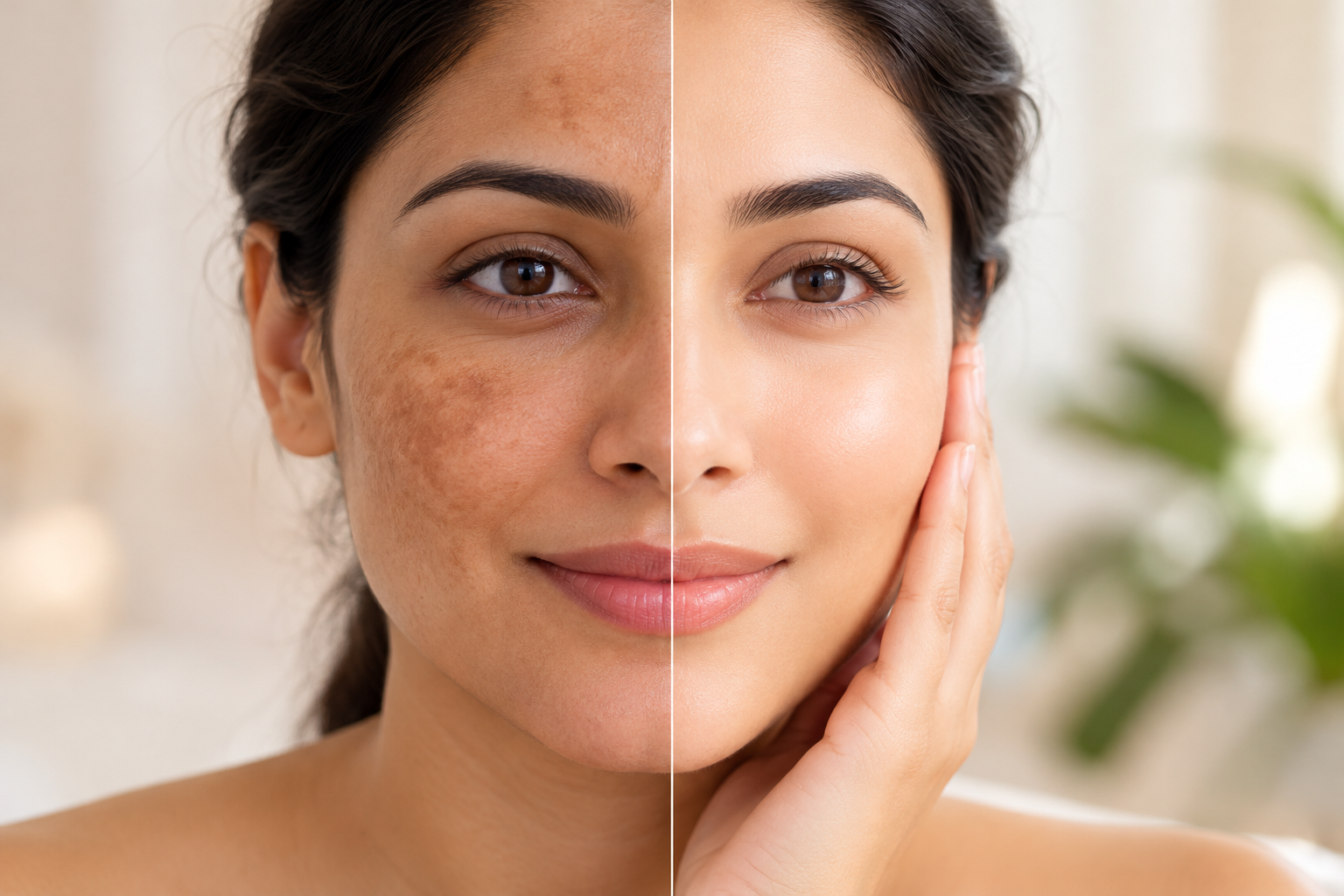
The common triggers are well established: sun exposure, hormonal changes from pregnancy or oral contraceptives, genetics, heat and inflammation, and wrong skincare products. In Kerala’s humid, sun-heavy climate, heat itself is a major but underrated trigger. Cooking near a hot stove, long commutes in strong sunlight, and even hot yoga can stimulate pigment-producing cells.
One distinction matters clinically. Epidermal melasma sits closer to the surface and responds faster to topical treatment. Dermal melasma sits deeper and looks more blue-grey, which is why it resists creams alone. Many people have a mix of both, which is why a dermatologist examines the skin under specific lighting before choosing a treatment plan.
The Daily Routine That Does the Heavy Lifting
Sunscreen is non-negotiable, but the type matters. A broad-spectrum SPF 30 or higher is the baseline. A tinted mineral sunscreen containing iron oxide adds protection against visible light and blue light from screens, which can worsen pigmentation. Reapply every two to three hours when outdoors, and remember that sitting near a window counts as sun exposure.
Pigment-inhibiting ingredients work slowly and steadily. Dermatologist-prescribed options include hydroquinone, azelaic acid, kojic acid, and vitamin C. Over-the-counter serums with tranexamic acid, niacinamide, or alpha arbutin can support the routine. Cell-turnover boosters such as tretinoin help shed pigmented cells, but they need medical supervision because overuse causes irritation and rebound darkening.
A common mistake is layering too many active ingredients at once. That creates inflammation, and inflammation creates more melasma. Dr Swathy Krishna S, Consultant Dermatologist at TLC Skyn, approaches this step by step: control any active acne or irritation first, then fade the pigmentation, then maintain with a minimal routine.
In-Clinic Treatments Worth Asking About
Chemical peels are a mainstay for melasma on Indian skin. Controlled glycolic acid or salicylic acid peels exfoliate pigmented layers and improve texture. Q-switched laser toning is often preferred for melanin-rich skin because it delivers low-energy pulses that break up pigment with a lower risk of post-inflammatory hyperpigmentation. Microneedling with PRP can help when melasma overlaps with textural concerns. For stubborn or dermal melasma, Cosmelan or Dermamelan peels are a recognised option, though they require strict aftercare.
Malavika Manilal shared that after chemical peeling for pigmentation on her face and neck, “the results were amazing and I am 100% satisfied.” Renu S noted that glutathione treatment reduced her pigmentation significantly. These are individual experiences, not guarantees, but they reflect what a structured plan can achieve.
The order of treatment matters as much as the treatment itself. Treating active acne first, then fading the marks, prevents a cycle where new breakouts keep creating fresh pigmentation. TLC Skyn follows this root-cause approach, with thorough consultations that consider diet, lifestyle, and existing products before prescribing anything.
A Sensible Next Step
Start with the basics today: a tinted mineral SPF 30 or higher, a gentle cleanser, and one pigment inhibitor rather than five new products. If melasma has not improved after eight to twelve weeks of consistent protection, a dermatologist consultation is the next move. TLC Skyn offers online and WhatsApp consultations with weekly monitoring for people who cannot visit in person, including those outside Kollam or abroad, so location is not a barrier to getting a structured plan. The goal is not just fading the patches but keeping them from returning, and that requires a routine you can actually sustain.
What People Also Ask
What is the fastest way to get rid of melasma?
The fastest approach combines daily strict sun protection with dermatologist-supervised procedures such as chemical peels or laser toning, plus prescription topicals. There is no instant fix, and aggressive treatments that promise overnight results often backfire on Indian skin by causing more pigmentation.
What is the best vitamin to remove melasma?
Vitamin C is the most commonly recommended antioxidant for brightening and supporting pigment control. It works best alongside sunscreen and other pigment inhibitors, not as a standalone cure. Oral supplements should only be taken under medical guidance.
How do Koreans treat melasma?
Korean approaches emphasise prevention, gentle layering, and consistent use of brightening ingredients like niacinamide, tranexamic acid, and vitamin C, combined with high-SPF sunscreens and minimal irritation. In-clinic treatments such as low-energy laser toning and peels are used for resistant patches.
Which foods reduce melasma?
No food removes melasma, but a diet rich in antioxidants from vegetables, fruits, and adequate hydration supports overall skin health. Some dermatologists advise reducing high-glycemic foods and dairy when hormonal pigmentation is involved, though this varies by person.