

How to Treat Acne in Teenagers: What Works and What Doesn’t
Nearly 85 percent of teenagers experience some form of acne, making it one of the most common skin concerns during the teenage years. Most cases improve with a simple, consistent skincare routine, while some require professional acne treatment to control breakouts and prevent permanent scarring. This guide covers what genuinely works, what makes breakouts worse, and when to see a dermatologist for the right acne treatment.
What Causes Teenage Acne?
Rising hormone levels during puberty push the skin’s oil glands to produce more sebum. This extra oil mixes with dead skin cells and blocks pores, letting a bacteria that naturally lives on the skin, C. acnes, multiply and trigger redness and swelling. Genetics, sweat and Kerala’s humid climate can add to the problem. These bumps generally fall into four types.
- Blackheads, clogged pores that stay open
- Whiteheads, clogged pores that close over
- Papules and pustules, small red or pus filled bumps
- Nodules and cysts, deeper and more painful lumps that carry the highest risk of scarring
At a Glance: What Works vs What Doesn’t
| Works | Doesn’t Work |
| Gentle cleansing twice a day | Scrubbing or washing more than twice daily |
| Benzoyl peroxide and salicylic acid | Popping or picking pimples |
| Topical retinoids like adapalene | Layering several active ingredients at once |
| Non-comedogenic moisturiser and SPF | Sunbathing to dry out breakouts |
| Dermatologist guided treatment for severe acne | Stopping treatment the moment skin clears |
How to Treat Acne in Teenagers: What Actually Works
1. Gentle, consistent cleansing
Washing the face twice a day with a mild, non-comedogenic cleanser clears excess oil without damaging the skin barrier. Washing more often does not speed up results and usually backfires by irritating the skin.
2. Benzoyl peroxide and salicylic acid
Benzoyl peroxide targets acne causing bacteria and excess oil, while salicylic acid helps clear blocked pores. Both remain the most evidence backed first step for mild to moderate teenage acne and are widely available over the counter.
3. Topical retinoids
Adapalene and similar retinoids unclog pores and stop new breakouts from forming. Mild dryness is common at first, so most dermatologists suggest starting a few times a week and building up gradually alongside a good moisturiser.
4. Non-comedogenic moisturiser and daily sunscreen
Skipping moisturiser can push oily skin to produce even more oil. A lightweight, oil free sunscreen also protects healing skin and helps post-acne marks fade faster.
5. Professional treatment when needed
When over the counter products are not enough, a dermatologist can prescribe stronger medication or recommend procedures such as a chemical peel or medi facial to speed up results and lower the risk of lasting acne scars. Most treatments take six to twelve weeks to show results, so consistency matters as much as the product. TLC Skyn’s guide to treatment timelines covers this in more depth.
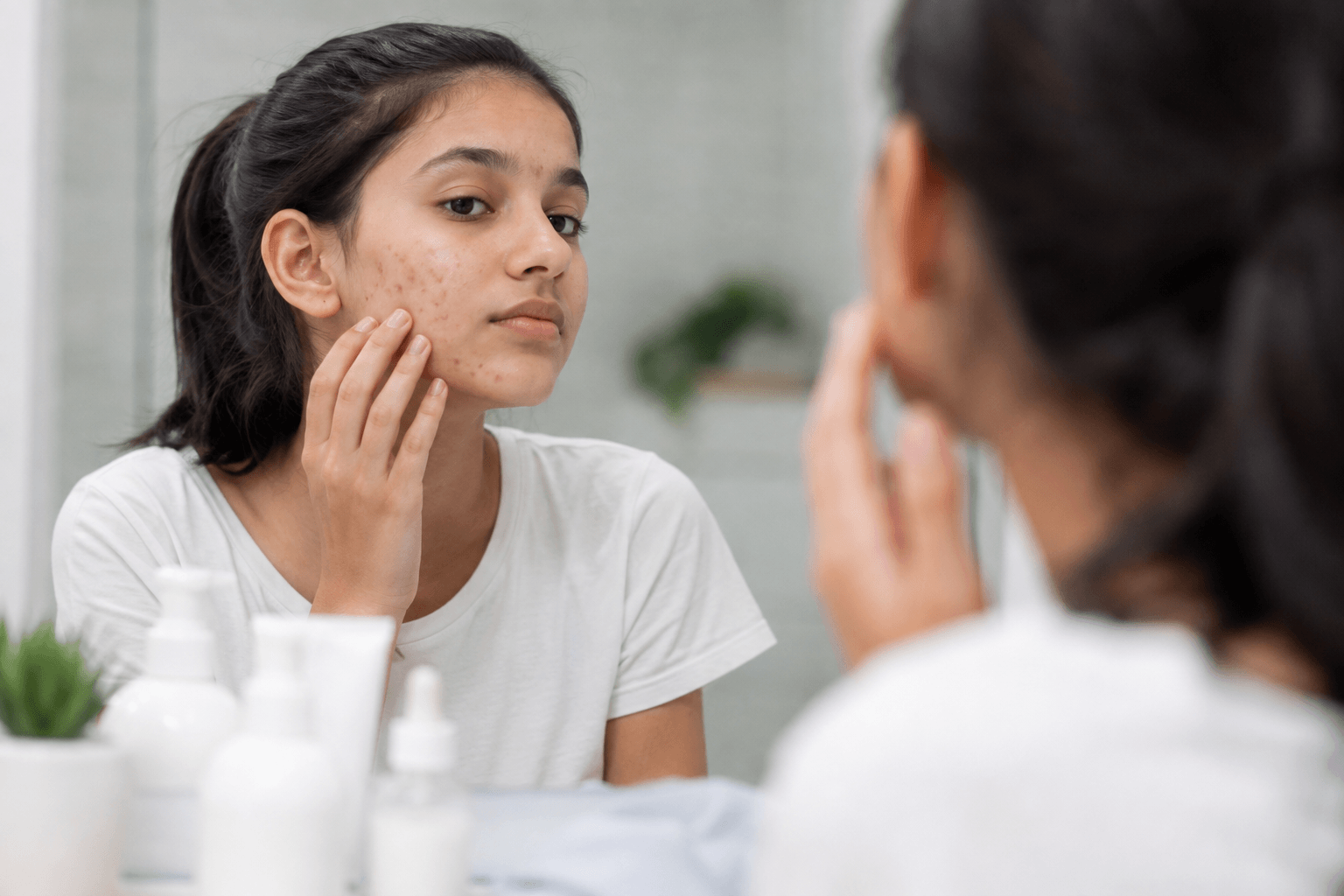
What Doesn’t Work (and Can Make Acne Worse)
- Oil based cosmetics and hair products can clog pores, especially along the hairline and forehead
- Tight caps, helmets and phone screens create friction that can irritate acne-prone skin
- Dirty pillowcases and towels carry oil and bacteria back onto freshly cleansed skin
TLC Skyn’s guide to 10 mistakes that make acne worse covers more everyday habits worth avoiding.
Does Diet Play a Role?
Diet alone does not cause acne, but sugary and high glycemic foods may worsen breakouts in some teenagers. There is no need for a strict diet, though cutting back on sugary snacks alongside good skincare can help. TLC Skyn’s article on candiet really causes acne looks deeper at this.
When Should a Teenager See a Dermatologist?
Book a consultation if breakouts are painful, cystic or spreading, if over the counter products show no improvement after eight to twelve weeks, or if acne is leaving dark marks or scars. Early care is the most reliable way to prevent permanent scarring.
Teenage Acne Care at TLC Skyn, Kollam
TLC Skyn’s 2026 approach to teenage acne combines prescription therapy, medical grade peels and lifestyle guidance built around each teenager’s skin rather than a generic product list. Book a consultation with Dr. Swathy and the team for a plan that fits your child’s skin.
Frequently Asked Questions
- Is teenage acne caused by poor hygiene?
No, it is caused by hormones and excess oil, not dirt or poor hygiene.
- Does popping pimples make acne worse?
Yes, it increases the risk of infection and permanent scarring.
- How long does teenage acne treatment take to work?
Most teenagers see visible improvement within six to twelve weeks of consistent treatment.
- Can teenagers use adult acne products?
Most mild acne ingredients are safe for teens, though benzoyl peroxide should be doctor approved for children aged 12 and under.
- Does diet alone cause teenage acne?
No, but high sugar and high glycemic foods can worsen breakouts in some teens.
- When does teenage acne usually go away?
For most teens it fades as hormone levels stabilise in the late teens, though some need ongoing treatment.