

How to Get Rid of Back Acne Scars: Causes, Treatments and Prevention Tips
The fastest way to get rid of back acne scars is a combination of active-breakout control, targeted skincare (AHAs, salicylic acid, vitamin C), and in-clinic procedures like chemical peels, microneedling RF, or subcision. Most people see visible fading within 6 to 12 weeks, while deeper scars may require 3 to 6 dermatologist-led sessions. If you’re looking for acne treatment in Kollam, consulting a dermatologist early can help prevent new scars and create a personalized treatment plan for faster, long-lasting results.
Back acne scars can feel more frustrating than facial acne, mainly because they’re harder to treat and easy to hide, which means they often get ignored until they’ve settled in. If you’ve been dealing with dark marks, raised bumps, or pitted spots on your back and shoulders, the good news is that most of these scars respond well to the right combination of skincare and clinical treatment. Whether you’re seeking effective acne treatment in Kollam or simply want to understand the best treatment options, here’s a complete, dermatologist-informed breakdown of why back acne scars form, how to treat them, and how to stop new ones from showing up.
What Causes Back Acne Scars?
Your back has some of the largest and most active oil glands on your body, which makes it especially prone to deep, inflamed breakouts. When these breakouts are picked at, poorly treated, or left to heal on their own, they can leave lasting marks. Common triggers include:
- Trapped sweat and friction from tight clothing, backpacks, or sports gear rubbing against damp skin
- Hormonal shifts during puberty, periods, or pregnancy that increase oil production
- Genetics – a family history of acne makes scarring more likely
- Picking or scratching inflamed pimples, which damages deeper skin layers
- Humid, coastal climates like Kerala’s, where heat and monsoon moisture keep pores clogged for longer
- Unwashed sheets, towels, or hair oils transferring bacteria onto the back
- Certain medications, including steroids, that can worsen breakouts
- Diet, since high-glycemic foods can trigger hormonal breakouts that later scar
Left untreated, inflamed acne damages the collagen structure beneath the skin, and it’s this damage not the pimple itself that becomes a scar.
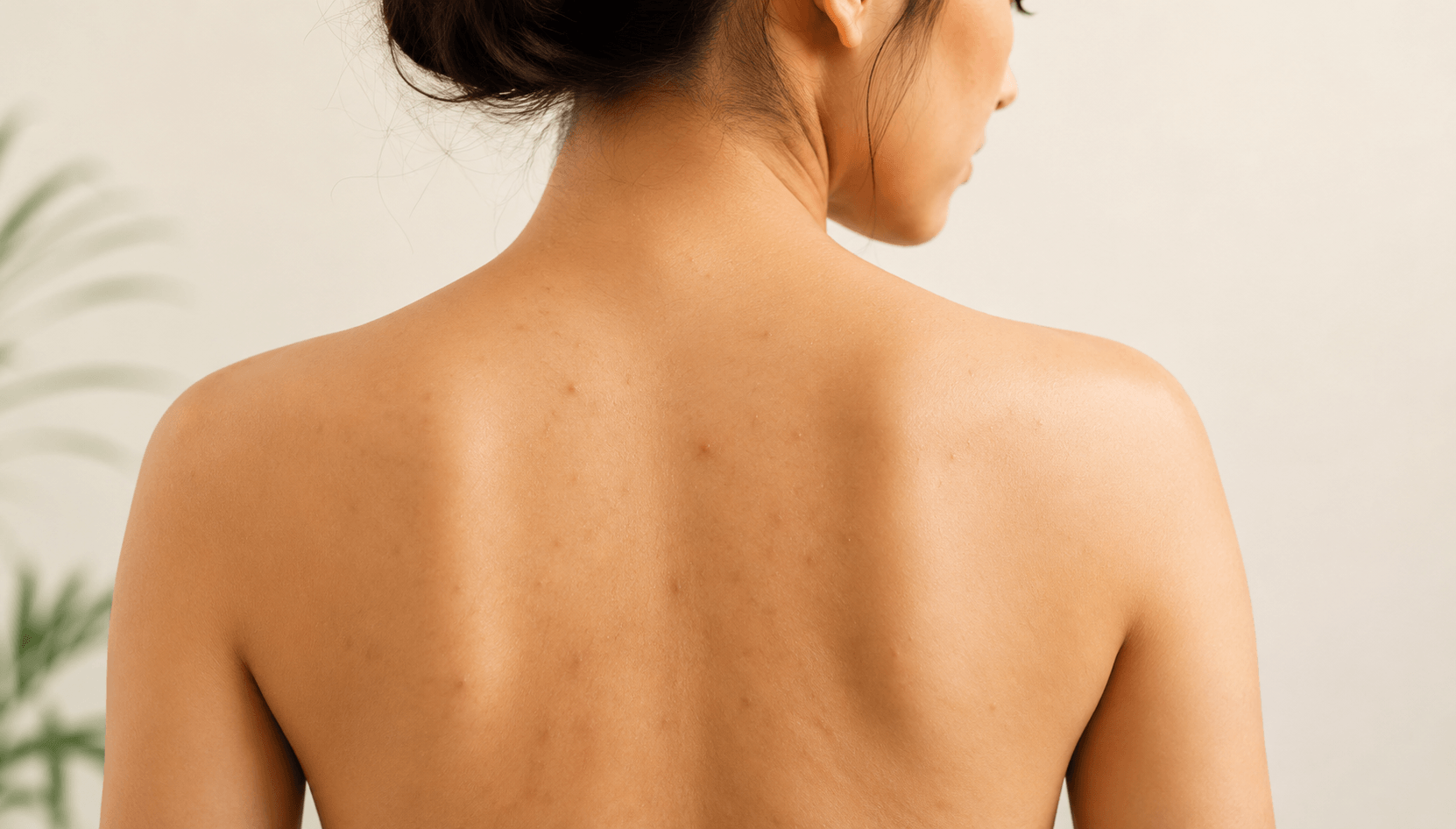
Types of Back Acne Scars
Not all scars are the same, and the treatment that works depends on which type you have:
- Hypertrophic scars – raised, thickened tissue that sits above the skin
- Keloid scars – smooth, firm growths that can extend beyond the original breakout
- Atrophic scars (boxcar, rolling, or ice-pick) – sunken, pitted areas caused by collagen loss
- Post-inflammatory hyperpigmentation – flat, dark or reddish-brown patches left behind after a breakout heals; the same pigment-fading approach used for dark lip pigmentation often applies here too
A dermatologist can usually identify the scar type in a single visual examination, which is important since raised and sunken scars need very different approaches.
How to Get Rid of Back Acne Scars: Treatment Options
At-Home Care for Mild Scarring
If your scarring is recent or superficial, these steps can help fade marks gradually:
- Use a non-comedogenic body wash with salicylic acid or benzoyl peroxide to keep pores clear
- Apply AHAs like glycolic or lactic acid a few times a week to gently exfoliate dead skin and fade discoloration
- Add vitamin C or niacinamide serums to reduce pigmentation and even out skin tone
- Always use SPF on exposed areas, since sun exposure darkens scars further
- Never pick or pop active pimples this is one of the biggest reasons scars deepen
At-home products work best on flat, discolored marks. Raised or pitted scars almost always need professional intervention.
In-Clinic Treatments for Stubborn or Deep Scars
For scars that haven’t responded to home care, dermatology-led procedures give faster and more predictable results. At TLC Skyn, Dr. Swathy Krishna assesses your scar type before recommending a plan, which typically includes one or a combination of:
- Chemical peels – medical-grade glycolic, salicylic, or TCA peels that resurface the skin and fade pigmentation
- Microneedling RF – stimulates fresh collagen to smooth out boxcar and rolling scars
- Subcision – releases the fibrous bands holding down tethered, pitted scars
- TCA CROSS – targets deep ice-pick scars with precision
- Laser toning – helps even out red or brown discoloration left after healing
Since active breakouts need to be controlled first, your dermatologist will usually pair scar treatment with an ongoing acne management plan to prevent new scars from forming during the process.
How Long Does It Take to See Results?
Most people notice visible improvement in acne scars treatment within 6 to 12 weeks, though deeper scars may need 3 to 6 treatment sessions spaced about a month apart for full results. This mirrors the realistic timeline dermatologists give for acne treatment in general consistency matters more than speed here, since scars that took months to form usually take a few months to fade.
Prevention Tips to Stop New Back Acne Scars
- Shower and change out of sweaty clothes as soon as possible after a workout
- Choose loose, breathable, cotton or sweat-wicking fabrics
- Wash bedsheets and towels weekly
- Keep hair oils and conditioners off your back while bathing
- Manage stress, since cortisol spikes can trigger extra oil production
- Treat active breakouts early instead of waiting for them to clear on their own
When to See a Dermatologist
Book a consultation if you notice:
- Painful lumps or nodules under the skin
- Scarring that keeps spreading or darkening
- No improvement after 8-10 weeks of home care
- Signs of infection, such as swelling, warmth, or fever
Frequently Asked Questions
Can back acne scars go away completely?
Most fade significantly with treatment, though very deep scars may only improve rather than disappear entirely.
Are chemical peels safe for back acne scars?
Yes, when performed by a qualified dermatologist using the right strength for your skin type.
How soon can I treat a scar after a breakout heals?
Wait until active inflammation settles, usually 4-6 weeks, before starting scar-specific treatment.
Is back acne scarring more common in humid climates?
Yes, heat and humidity increase sweating and oil production, both of which worsen breakouts.
Does diet affect back acne and scarring?
High-glycemic foods can worsen inflammation and breakouts, indirectly increasing scarring risk.
If back acne scars have been bothering you, book a consultation with the best skin doctor in Kollam Dr. Swathy Krishna at TLC Skyn for a personalised assessment and treatment plan.