

How to Cure Urticaria Permanently: What Science Says About Long-Term Relief
Somewhere out there it’s 2 am and someone is scratching their forearms while typing “how to cure urticaria permanently” into a phone. Maybe that someone is you. Hives do this to people. The welts appear, fade, pop up somewhere new, take a day off, then return like they never left. It wears you down in a way that’s hard to explain to anyone who hasn’t had it.
So let’s skip the miracle-cure headline and be honest with each other. There is no switch that shuts urticaria off forever, not for everyone, not on demand. But most cases do end. A lot of them end on their own. And almost every case can be properly controlled while you wait for that to happen. That’s the real story, and it’s better news than half the internet will give you.
Okay, what actually is urticaria?
Hives, basically. Raised, itchy welts that show up when mast cells in your skin dump histamine. One odd but useful detail: any single welt usually disappears within a day, often within hours. New ones just keep forming elsewhere, so the whole rash appears to wander around your body. That wandering is also how you tell it apart from eczema, which parks itself in one spot and cracks the skin surface while it’s at it.
Doctors draw one line through all of this, and it’s just a date on the calendar. Episodes for under six weeks? Acute. Past six weeks? Chronic. Sounds arbitrary. Changes everything about the work-up.
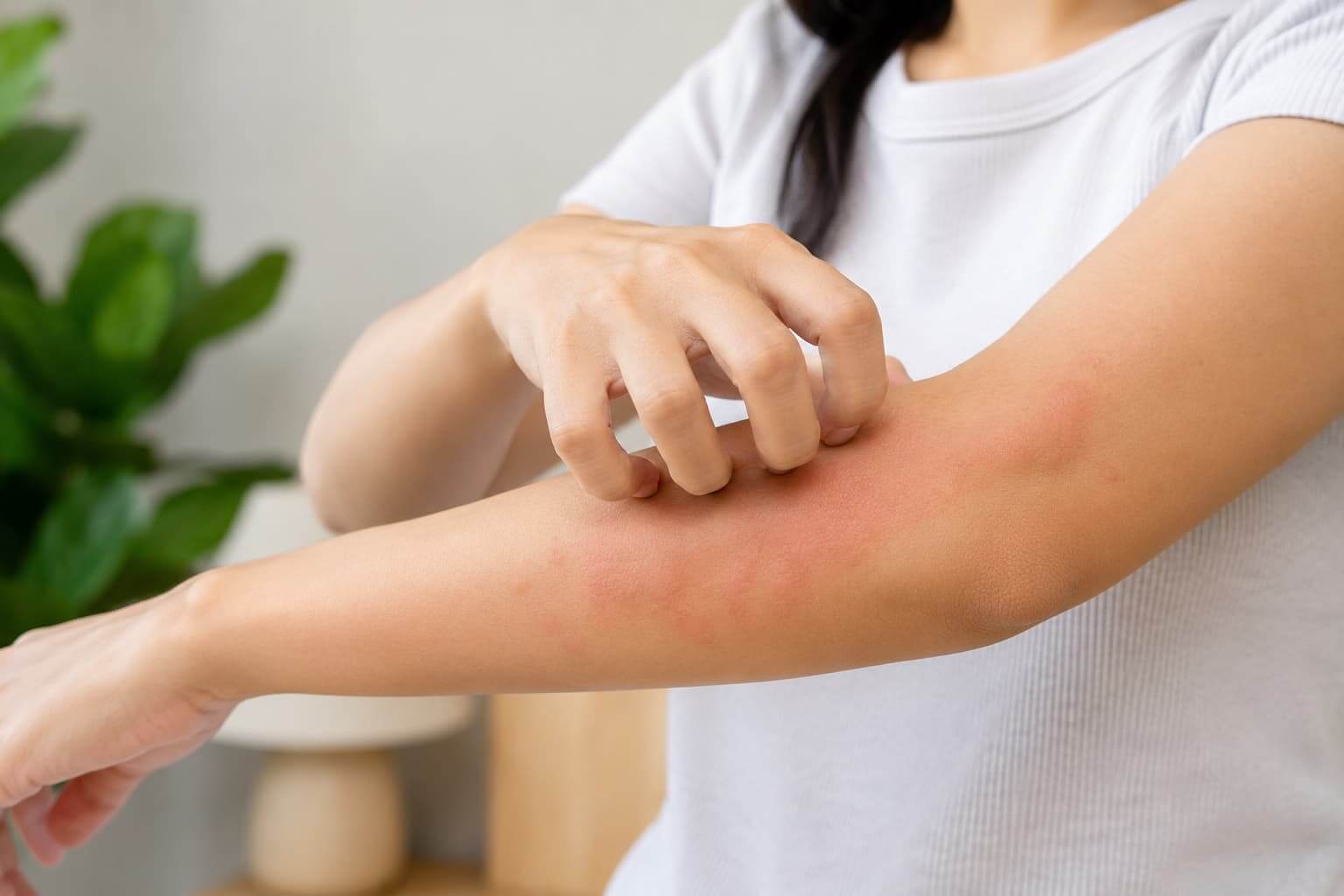
Can urticaria be cured permanently? Honest answer time
Acute urticaria mostly cures itself. Something sets it off, an infection, a food, some medicine, and once that trigger clears out, the hives usually go with it. Done, in most cases.
Chronic urticaria is the version that keeps people up googling. And here’s the uncomfortable truth: in most chronic cases, nobody ever finds an outside cause. The immune system is simply misfiring on its own schedule. No tablet exists that deletes that tendency permanently. We’d love to tell you otherwise. We can’t.
Now the hopeful part, because there genuinely is one. Chronic urticaria has a habit of burning itself out. A big share of cases go quiet within one to five years. Plenty go sooner. So the realistic target isn’t a magic cure, it’s complete control of symptoms until your body decides it’s done. Modern treatment happens to be very good at exactly that.
Why it keeps coming back
The usual suspects, roughly in the order we see them:
- Infections. Even boring viral ones you barely noticed at the time.
- Certain foods and additives, though this is mostly an acute-urticaria thing.
- Painkillers, especially aspirin and other NSAIDs.
- Physical stuff: pressure, heat, cold, sweating, sunlight. A tight waistband can do it. Kerala humidity doesn’t help.
- Stress. Doesn’t cause urticaria, but it fans the flames with impressive reliability.
- Underlying conditions, thyroid autoimmunity in particular, which turns up next to chronic hives more often than coincidence allows.
If your flares clearly chase one specific food or exposure, fine, get a proper allergy work-up done. But dermatologists say this so often it’s practically a chant: chronic urticaria is rarely a food allergy wearing a disguise.
The stuff that actually works
Second-generation antihistamines. The non-drowsy kind. These are the foundation of urticaria care everywhere in the world, no exceptions. For stubborn cases, dermatologists sometimes push the dose well past what the packet says, and yes, international guidelines allow that. Under supervision. Please don’t run that experiment on yourself at home.
Looking underneath. Thyroid tests. A check for lingering infections. An honest review of every medicine you take regularly. When something fixable shows up, fixing it often calms the skin down too.
The heavy hitters, for resistant cases. When chronic urticaria shrugs off antihistamines completely, there’s omalizumab, an injectable biologic that goes after IgE. It has honestly changed the game over the past decade for people who’d tried everything. Beyond that, short courses of other immune-calming medicines exist for the hardest cases. Specialist territory, all of it. Not pharmacy-counter decisions.
Steroids. Briefly. Rarely. A short course can snap a nasty flare. Months of steroids for hives, though? That trade always goes badly. If that’s the plan someone has you on, a second opinion isn’t rude, it’s sensible.
What doesn’t work (keep your money)
Blood purification tonics. Detox packages. Those food intolerance panels that come back declaring twenty foods your enemy. The brutal elimination diets people build on top of those panels. None of it has real evidence for chronic urticaria. The diets are the worst of the lot, honestly, because you end up underfed and exactly as itchy as before.
Kerala runs thick with permanent-cure promises for skin problems. A rule worth keeping: the more absolute the promise, the thinner the science underneath it.
Getting through it while it settles
Small adjustments do more than you’d think. Cool showers, not hot, however tempting the hot one is. Loose cotton instead of anything tight and synthetic. If aspirin-type painkillers set you off, skip them; paracetamol usually behaves better, but run that past your doctor. Keep a photo diary of flares too, because your camera spots patterns your memory won’t. And take stress seriously. A flare landing in the same week as a deadline is almost never a coincidence, and pretending otherwise doesn’t help your skin.
When to actually see a dermatologist
Two situations. Completely different clocks.
Right now, emergency: lips, tongue or throat swelling. Trouble breathing. Feeling faint. That has left hives territory and needs a hospital immediately, not an appointment next Tuesday.
Soon, dermatologist: hives still returning past six weeks, single welts that hang around beyond a day or leave marks when they go, or symptoms your usual antihistamine can’t hold anymore. At TLC Skyn in Kollam, Dr. Swathy Krishna does a structured work-up for urticaria and builds a stepwise plan, which beats living on an endless antihistamine loop. Book a consultation, or if the trip’s a problem, start with an online skin consultation. Or just call +91 9072 80 66 55.
FREQUENTLY ASKED QUESTIONS
So there’s really no permanent cure for urticaria?
Not a guaranteed one, no. Acute cases usually end when the trigger does. Most chronic cases eventually switch themselves off. Treatment keeps you comfortable and clear-skinned in the meantime, which counts for a lot.
How long does chronic urticaria last?
Wildly variable. Months for some. One to five years for many. Longer for a few. What you can influence is control, and control is possible at every stage.
Are hives dangerous?
The ordinary kind, no. Miserable, yes. Dangerous, no. But face, tongue or throat swelling, or any trouble breathing, is an emergency. Hospital. Now.
Will changing my diet fix it?
If one food reliably triggers you, avoid it, obviously. But chronic urticaria rarely comes from food, and punishing elimination diets rarely cure it. Test, don’t guess.