

Reasons for Chest Acne: Why You’re Getting Breakouts on Your Chest
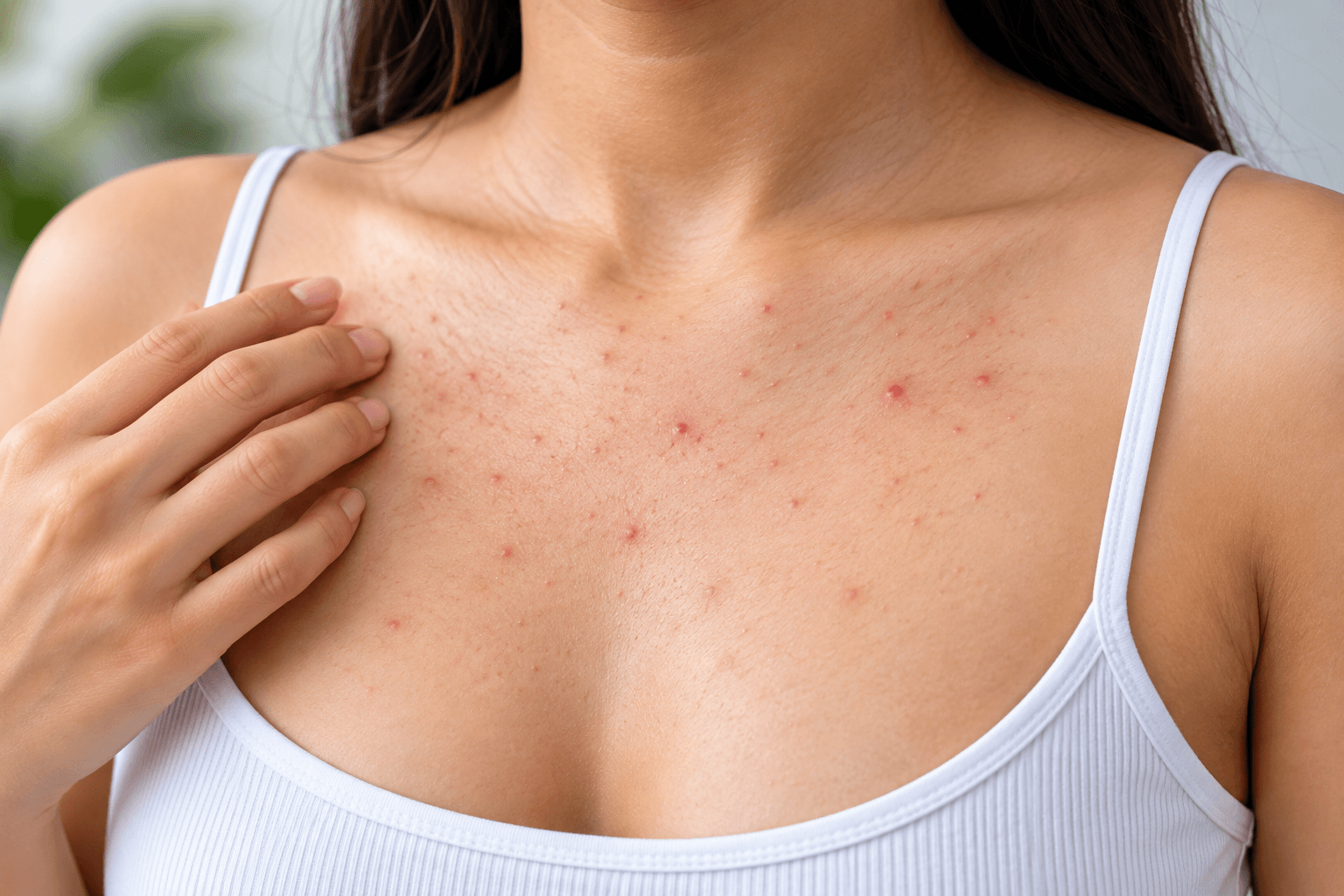
Look, chest acne-yeah, people actually call it “chestne”-isn’t that different from what’s happening on your face. Same basic deal: pores get clogged, oil goes into overdrive, bacteria moves in, and suddenly you’ve got inflammation. Thing is, your chest deals with some extra stuff your face doesn’t-sweat sitting around, clothes rubbing against it all day, body products that might be doing more harm than good.
What’s Actually Causing This?
So here’s the thing: chest acne shows up when the hair follicles on your chest get blocked. It’s this mix of oil, dead skin cells that haven’t shed properly, and bacteria. But why the chest specifically? Well, there are a few reasons that make this area kind of a breakout magnet.
1. Hormones Being Hormones
Hormonal changes-whether it’s puberty, your period, pregnancy, or something like PCOS-basically tell your oil glands to go crazy with sebum production. All that extra oil? It clogs pores. And once pores are clogged, acne bacteria (Cutibacterium acnes, if you want the technical name) has basically everything it needs to thrive.
- You’re Sweating (And Not Showering Right Away)
Sweat on its own doesn’t cause acne. But-and this is a big but-when it sits on your skin, especially after a workout or when it’s hot and humid out, it mixes with oil and bacteria. Next thing you know, pores are clogged. Honestly, not showering soon enough after sweating is probably one of the top reasons people get chest breakouts.
3. Friction and Pressure (Yeah, It’s Called Acne Mechanica)
Tight clothes, sports bras, backpacks, workout gear that rubs-any of this creates friction and traps heat against your skin.There’s actually a name for it: acne mechanica. Basically, the irritation inflames your hair follicles and boom, breakouts. Athletes deal with this a lot, but really anyone wearing non-breathable fabrics can end up with it.
4. Your Body Products Might Be the Problem
Heavy lotions, thick creams, certain sunscreens, even some body washes-they can all block pores on your chest.You want to look for “non-comedogenic” on the label (that just means it won’t clog pores). And honestly, skip the super fragranced or greasy stuff if you’re prone to breakouts.
5. Diet and Lifestyle Stuff
This one’s a bit all over the place, but there’s something to it:
- High-sugar, high-glycemic foods can spike your insulin, which then increases oil production.
- Stress raises cortisol, and cortisol can make inflammation and breakouts worse.
- Not drinking enough water might actually trigger your skin to overproduce oil to compensate.
- Some medications-corticosteroids, lithium, certain androgen-containing drugs-can cause acne as a side effect.
6. Laundry Detergent and Fabric Softener
Kind of random, I know, but harsh chemicals, dyes, or perfumes in laundry products can irritate sensitive chest skin. If you’re breaking out and can’t figure out why, switching to a fragrance-free, hypoallergenic detergent might actually help.
7. Too Much Sun
Sun exposure dehydrates your skin, which then makes your oil glands overcompensate and produce more sebum. Plus, some sunscreens are comedogenic-so if you’re not careful about which one you pick, you might be clogging pores without realizing it.
8. Genetics
If you naturally have oily skin or there’s a family history of acne, you’re just more likely to get chest breakouts. Kind of unfair, but that’s how it goes sometimes.
How to Actually Deal With It
Preventing chest acne really comes down to tackling those root causes:
- Shower right after you sweat. Don’t wait. Get that oil, bacteria, and sweat off before it has time to clog anything.
- Wear loose, breathable stuff. Cotton’s your friend here. Reduces friction and lets your skin actually breathe.
- Check your body products. Non-comedogenic only. Skip the heavy, oil-based lotions on your chest.
- Exfoliate, but gently. Salicylic acid (BHA) or glycolic/lactic acid (AHA) can help unclog pores and get rid of dead skin cells.
- Drink water and maybe cut back on the sugar. Helps reduce oil production.
- Switch your laundry detergent . if you think your clothes might be irritating your skin.
If it’s persistent or pretty severe, though, a dermatologist is worth it. They might suggest topical retinoids, benzoyl peroxide, oral antibiotics, hormonal therapy, or in-clinic stuff like chemical peels.
When Should You Actually See Someone?
Book a consultation if:
- You’ve been consistent with home care for 8–12 weeks and nothing’s changed.
- You’ve got painful, deep cystic acne or nodules
- Your acne is leaving dark marks or scars.
- You’re suddenly breaking out as an adult
At TLC Skyn in Kollam, the acne treatment is dermatologist-led-so you’re getting medical-grade therapy, advanced peels, and advice that actually fits your skin.
Other stuff from TLC Skyn you might find useful:
- Acne Treatment in Kollam – For reducing breakouts and marks
- Understanding Acne: Causes, Types & Treatments – The science behind why breakouts happen
- Chemical Peel – In-clinic exfoliation for clearer skin
- Best Skin Doctor in Kollam – Advanced treatments for acne scars
FAQs
- Can chest acne go away on its own?
Sometimes, yeah-if it’s mild and you tweak your habits (like showering after workouts, wearing looser clothes, switching up body products But if it’s been hanging around for weeks or it’s the painful, deep kind, it probably won’t clear up without some actual treatment. [tlcskyn] - Is chest acne the same as back acne?
Pretty much, yeah. Both are body acne, both happen for similar reasons-sweat, friction, clogged pores, hormones. People often call back acne “bacne,” and honestly, the prevention and treatment tips overlap a lot. - Should I use my face acne products on my chest?
You can, but keep in mind chest skin is a bit thicker and can usually handle stronger stuff. Benzoyl peroxide or salicylic acid body washes work well. Just don’t go overboard-over-exfoliating can make things worse. - How long does it take to see results?
Realistically? Give it 6 to 12 weeks of consistent care before expecting major changes. [tlcskyn] Acne treatments take time to work, and your skin needs a few cycles to actually improve. If you’re not seeing anything after 8–12 weeks, that’s when a dermatologist makes sense. [tlcskyn] - Can diet really affect chest acne?
It can, for some people. High-sugar, high-glycemic foods might spike insulin and increase oil production. Not everyone’s acne is diet-driven, but if you notice breakouts after certain foods, it’s worth cutting back and seeing if it helps. [flo]