

Which Is the Best Treatment for Dandruff? Causes, Remedies and Best Solutions
Dandruff can feel simple, but it is not always just dry skin. The truth is that flakes can come from yeast overgrowth, oil imbalance, skin irritation, or even other scalp conditions that look like dandruff. So when people ask, Which is the best treatment for Dandruff? The best answer is: the treatment that matches the cause.
At TLC Skyn, we see many patients who have tried several shampoos with no lasting relief. Most of the time, the missing piece is either the correct diagnosis or a consistent plan. If you’re searching for a reliable skin clinic Kollam, expert guidance can make all the difference in achieving long-term dandruff control.
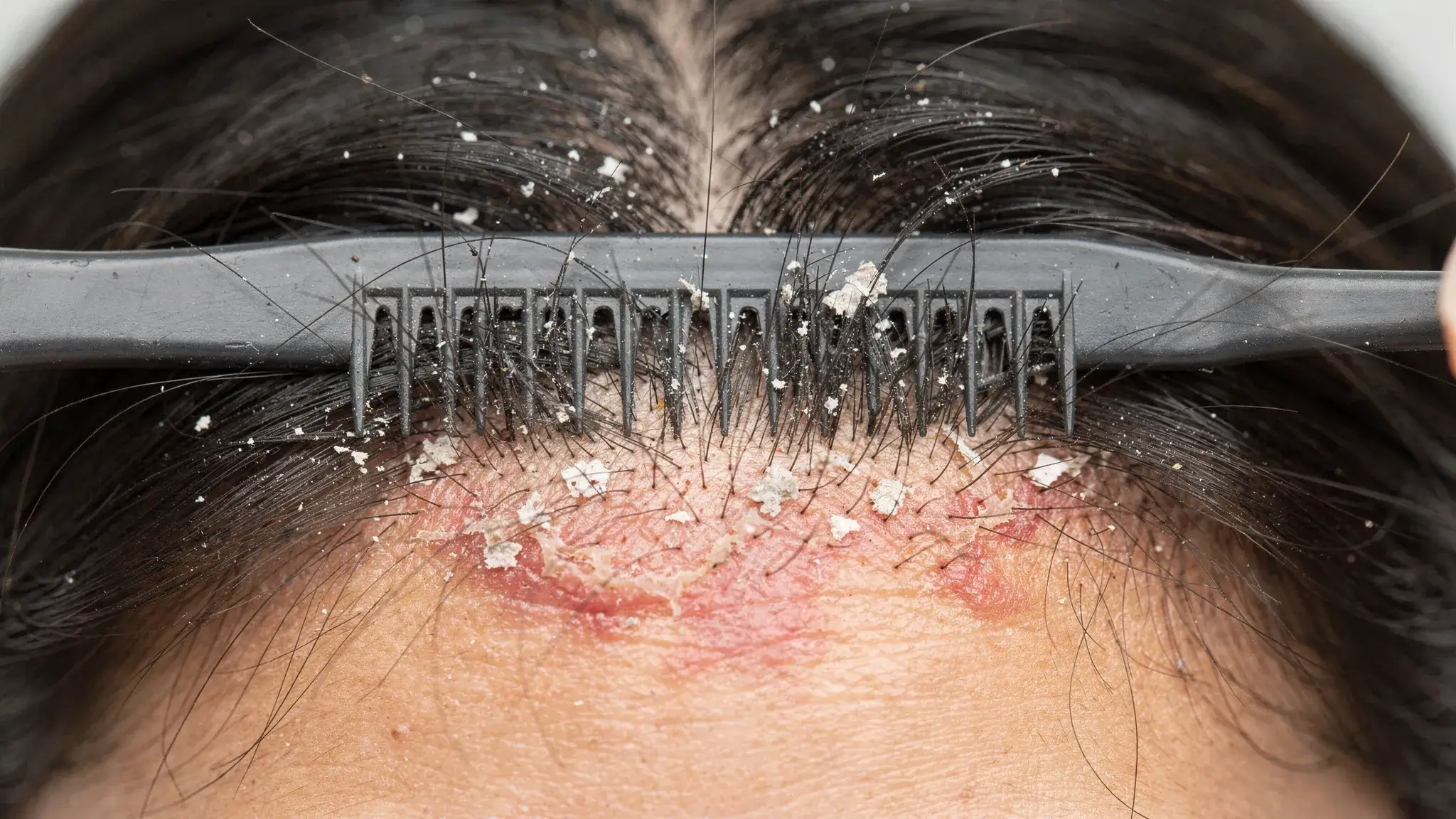
What is dandruff, and why does it happen?
Dandruff is usually mild scalp scaling with itching. In many people, it is linked to a common yeast called Malassezia that lives on the scalp. When the scalp becomes oily or irritated, Malassezia can increase and trigger inflammation, leading to flakes.
A widely cited medical estimate is that dandruff affects up to 50% of adults after puberty, making it one of the most common scalp problems worldwide. If you are looking for effective Dandruff Treatment in Kollam, getting the right diagnosis and care plan can help manage and control symptoms long term.
Common triggers that make dandruff worse
- Oily scalp (sebum buildup)
- Irregular hair washing (product and oil buildup)
- Stress and poor sleep
- Cold weather and low humidity
- Harsh shampoos, frequent hair color, heavy styling products
- Skin sensitivity, eczema prone skin, or seborrheic dermatitis tendency
Dandruff or something else? A quick comparison that matters
Not every flaky scalp is dandruff. If you treat the wrong condition, results stay poor.
| What you notice | More likely to be | Why it matters |
| White or yellowish flakes with itch, sometimes greasy | Dandruff or seborrheic dermatitis | Often responds well to antifungal shampoos |
| Thick silvery scales, may extend beyond hairline | Scalp psoriasis | May need medical anti inflammatory treatment |
| Patchy hair loss with scaling, often in children | Fungal scalp infection (tinea capitis) | Needs prescription antifungal tablets, not just shampoo |
| Painful redness, oozing, cracking | Eczema or contact allergy | Trigger removal and dermatologist guided treatment are key |
If you are unsure, it is worth seeing a skin specialist in Kollam because the look alike conditions can need very different care.
Which Is the Best Treatment for Dandruff? Start with evidence based active ingredients
Most successful Dandruff Treatment plans use one or more of these categories:
- Antifungal (targets Malassezia)
- Anti scaling (loosens and removes flakes)
- Anti inflammatory (calms redness and itching)
Here is a practical comparison you can use while choosing an anti dandruff product.
Comparison table: common dandruff shampoo actives
| Active ingredient type | Common examples | Best for | Typical use pattern (general) | Notes |
| Antifungal | Ketoconazole, ciclopirox | Frequent itch and stubborn flakes | 2 to 3 times weekly for 2 to 4 weeks, then maintenance | Let it sit on scalp for a few minutes before rinsing |
| Anti dandruff + mild antifungal | Zinc pyrithione | Mild to moderate dandruff | 2 to 4 times weekly | Good “starter” option for many people |
| Antifungal + anti scaling | Selenium sulfide | Oily scalp with scaling | 1 to 2 times weekly | Can feel drying on hair lengths for some |
| Keratolytic (flake loosener) | Salicylic acid | Thick scaling and buildup | 1 to 3 times weekly | Often combined with antifungal for better results |
| Anti scaling | Coal tar | Stubborn scale, some dermatitis types | 1 to 2 times weekly | Odor and staining can be an issue |
Important: availability and strength differ by country. Some antifungal strengths may be prescription only.
A simple, strategic plan like an investor mindset for your scalp
Many patients switch products too fast, use the right shampoo in the wrong way, or stop as soon as flakes improve. A better way is to treat your scalp like a smart investment: pick a strong option, give it time, measure results, then maintain.
Step 1: Pick one core medicated shampoo
For most people, start with either:
- Zinc pyrithione if dandruff seems mild to moderate
- Ketoconazole if dandruff is stubborn, itchy, or keeps returning
Use it mainly on the scalp, not the full hair length.
Step 2: Use correct technique (this is where most people lose results)
- Wet scalp well
- Massage shampoo into the scalp skin (not just hair)
- Leave it on for 3 to 5 minutes
- Rinse well
- Use conditioner only on hair lengths if needed
Step 3: Track progress with a simple 2 week chart
You do not need fancy tools. Rate itch and flakes from 0 to 10.
| Time point | What good progress often looks like |
| Day 3 to 7 | Itching starts to reduce |
| Week 2 | Visible flakes reduce noticeably |
| Week 4 | Flares reduce, scalp feels calmer |
If there is no improvement by 2 to 4 weeks, your diagnosis may be different (psoriasis, eczema, allergy, fungal infection), or you may need a combination plan from a dermatologist.
Home remedies: what helps, what to avoid
Home care can support treatment, but it should not replace proven therapy when dandruff is persistent.
Helpful habits
- Wash consistently (especially if you have an oily scalp)
- Clean combs, pillowcases, and hats regularly
- Reduce heavy oils and styling product buildup on the scalp
- Manage stress (many people flare during stressful weeks)
Be careful with these viral remedies
- Lemon juice, baking soda, harsh scrubs: these can irritate the scalp and worsen flaking long term
- Undiluted essential oils: can cause allergic contact dermatitis
If you want to try tea tree oil products, choose a well formulated shampoo and stop if burning or redness increases.
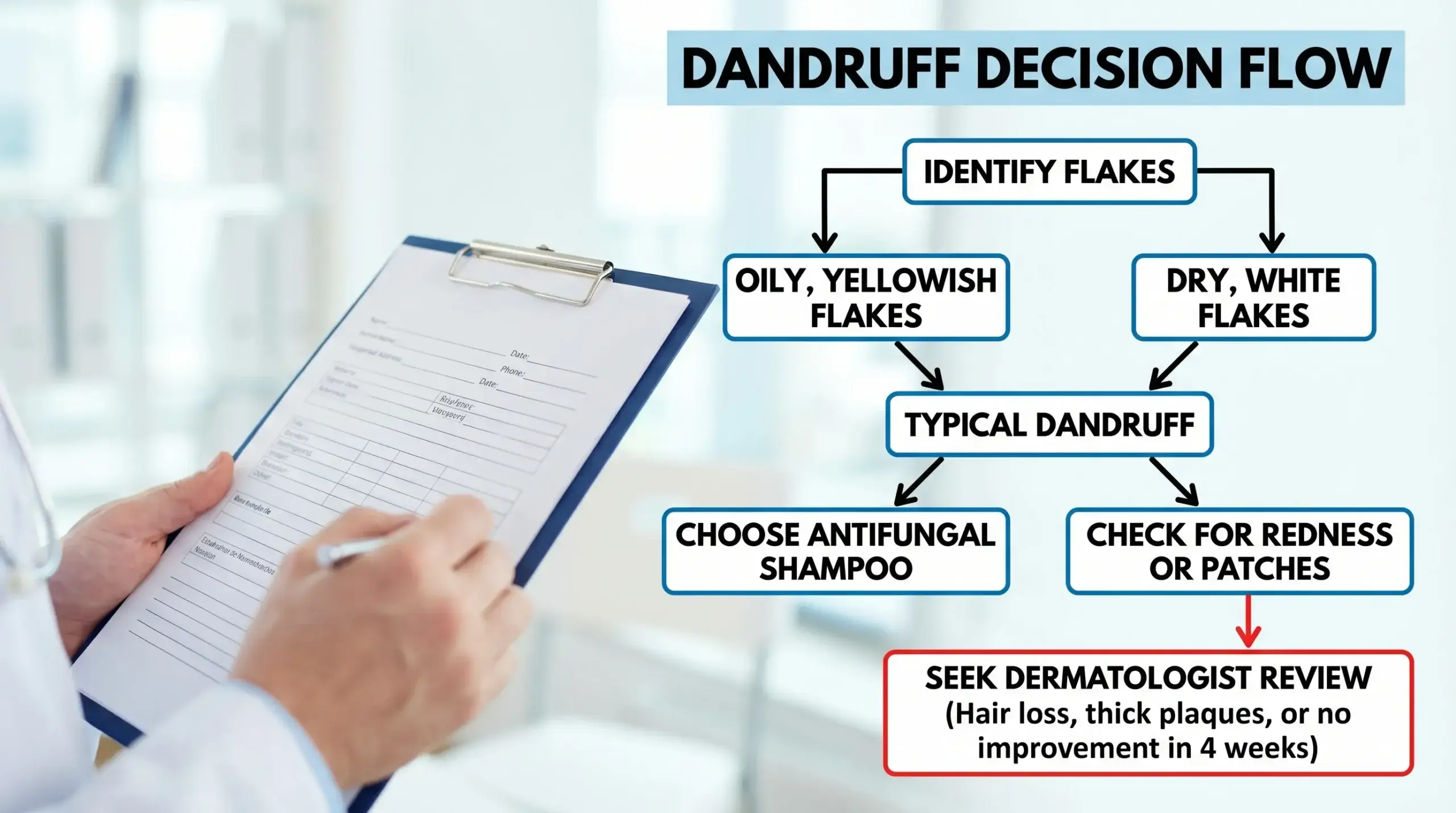
Trends in dandruff care and why it matters for you
Scalp care is becoming a major focus in beauty and dermatology, driven by consumer demand for “skin care level” solutions for the scalp.
Trend 1: Scalp microbiome focused products
Many brands now market microbiome friendly formulas (gentler surfactants, barrier supportive ingredients). While marketing can be noisy, the practical takeaway is real: over stripping the scalp can worsen irritation and rebound oiliness.
Trend 2: Leave on scalp serums and targeted routines
More routines now combine a medicated wash with a simple leave on calming product (for example, anti itch or barrier repair). This can reduce the need to overuse strong shampoos.
Trend 3: Investor interest in science led skin brands
Investors and large beauty groups have increasingly acquired dermatologist linked and clinical skin care brands over the last decade (for example, major groups acquiring pharmacy style and dermatologist recommended portfolios). The lesson for dandruff care is simple: evidence based actives and consistent routines win over “instant fix” claims.
When you should see a dermatologist especially for Dandruff Treatment in Kollam
See the best dermatologist in Kollam if you have any of the following:
- Dandruff that returns quickly after stopping shampoo
- Red patches, pain, swelling, or bleeding
- Thick scale or flakes beyond the scalp (eyebrows, sides of nose, behind ears)
- Hair fall with scalp scaling
- A child with scaling and hair loss (possible fungal infection)
- You suspect allergy from a shampoo or hair product
If you are looking for a clear diagnosis and long term plan, TLC Skyn can guide you with the right scalp evaluation and personalized Dandruff Treatment approach.
Frequently Asked Questions
Which Is the Best Treatment for Dandruff if it keeps coming back?
The best treatment is usually an antifungal based plan, often ketoconazole or similar used correctly for several weeks, followed by maintenance once weekly. If it returns fast, see a dermatologist to rule out seborrheic dermatitis, psoriasis, or product allergy.
How long does it take for dandruff shampoo to work?
Many people feel less itching in 3 to 7 days and see fewer flakes by 2 weeks. For stable control, it can take about 4 weeks, especially for stubborn cases.
Can dandruff cause hair fall?
Dandruff itself does not permanently damage follicles, but inflammation and scratching can increase shedding and breakage. Persistent dandruff with hair fall needs evaluation.
Is dandruff contagious?
No. Dandruff is not contagious, even though yeast on the scalp plays a role.
What is the best Dandruff Treatment in Kollam for sensitive scalp?
Many sensitive scalps do better with a gentle base shampoo plus a medicated dandruff shampoo only on scheduled days. A skin specialist in Kollam can help you choose activities that control flakes without irritation.
When should I consult TLC Skyn for dandruff?
If your dandruff is severe, keeps returning, comes with redness or hair fall, or does not improve after 2 to 4 weeks of correct use of medicated shampoo, a consultation can save time and prevent worsening.
Book a dandruff consultation at TLC Skyn
If you want a clear answer to Which Is the Best Treatment for Dandruff? for your scalp type, the fastest path is diagnosis first, followed by a simple plan you can stick to.
If you’re also wondering how much does GFC hair treatment cost, a personalized consultation can help you understand both pricing and suitability.
Visit TLC Skyn to book an appointment and get dermatologist-guided care for long-term dandruff control.
We also provide service for Mole Excision, Ear Piercing and Sebaceous Cyst Excision