Bacterial Acne vs Hormonal Acne: Key Differences, Causes and Treatment Options
Medically reviewed by Dr Swathy Krishna S (MBBS, DDVL), Consultant Dermatologist, TLC Skyn, Kollam.
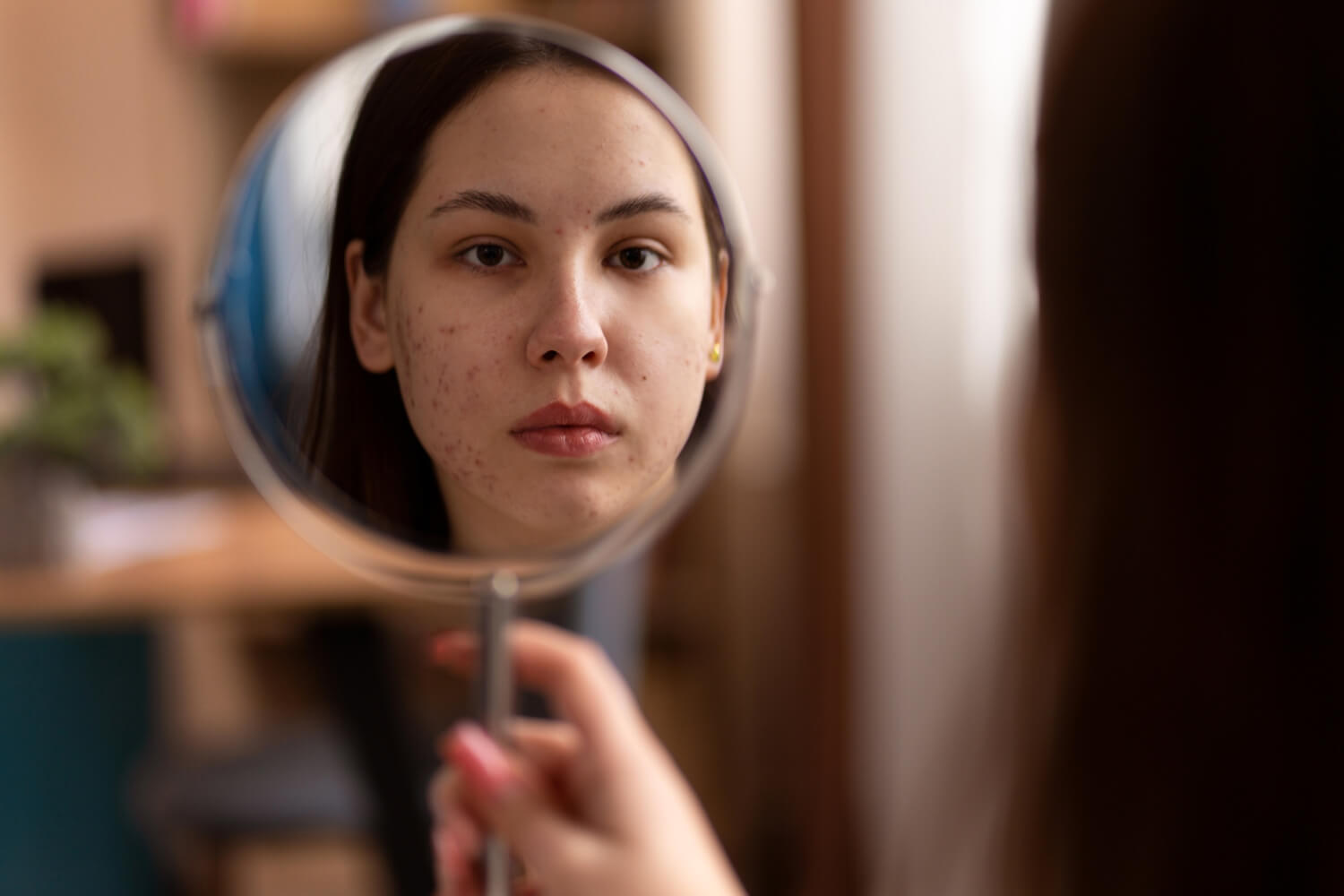
Bacterial acne and hormonal acne are not two completely separate diseases. In most cases, hormones create the conditions and bacteria do the visible damage. The practical difference comes down to where the breakouts sit, how they feel, when they appear, and what actually clears them. If your spots are deep, tender, and flare around your period, the root driver is likely hormonal. If they are surface-level, pus-filled, and spread across the forehead or nose, bacterial overgrowth inside clogged pores is usually the main event.
How the Two Types Actually Behave
Hormonal acne tends to concentrate on the lower face: chin, jawline, neck, and around the mouth. The lesions are often deeper, blind, and painful, sitting under the skin without a proper whitehead. They follow a cyclic pattern, worsening in the days before a menstrual period or during times of stress, pregnancy, or conditions such as PCOS. Androgens increase oil production, which feeds the cycle.
Bacterial acne, by contrast, usually shows up in the T-zone: forehead, nose, and upper cheeks, sometimes extending to the back and chest. It looks more like classic surface acne, with blackheads, whiteheads, red papules, and pus-filled pustules. It stays fairly consistent through the month rather than flaring with the cycle. The bacteria involved, Cutibacterium acnes, multiply inside pores already clogged with sebum and dead skin cells.
| Feature | Hormonal Acne | Bacterial Acne |
| Main zone | Chin, jawline, neck, lower face | Forehead, nose, upper cheeks, T-zone |
| Feel and look | Deep, blind, tender cysts without a head | Superficial papules, pustules, blackheads, whiteheads |
| Timing | Flares before periods or with stress | Fairly consistent month to month |
| Main driver | Androgen surges increasing oil production | C. acnes overgrowth in clogged pores |
Why the Distinction Matters for Treatment
Treating hormonal acne with only antibacterial washes or spot creams often disappoints, because the oil surge keeps refilling the pores. The deeper driver may need attention: diet, stress, sleep, and sometimes an underlying condition like PCOS. Dermatologists often look at the whole picture before choosing a plan. Dr Swathy Krishna S notes that a thorough consultation helps identify whether breakouts are cycle-related, lifestyle-related, or both, which changes the treatment path significantly.
For bacterial acne, the goal is to reduce bacterial load and keep pores from clogging. Topical antibacterial ingredients, gentle exfoliation, and consistent cleansing can help. But over-washing and harsh scrubs often backfire by stripping the barrier and triggering more oil. If enlarged pores are a concern too, an open pores treatment can be added once breakouts are under control.
A common mistake is assuming every chin pimple is hormonal or every forehead pimple is purely bacterial. The two overlap more often than people expect. Hormonal shifts can make the T-zone oilier too, and bacterial colonisation can worsen hormonal cysts. That is why a fixed, one-size plan rarely works for long.
What Actually Helps, Type by Type
For hormonal acne, the most useful steps are usually the least dramatic. Reducing high-glycaemic foods and dairy is a common starting point, since both can influence oil production and inflammation. Regular exercise, better sleep, and stress management matter more than most people expect. In-clinic options such as chemical peels can help control active breakouts first, after which the focus can shift to fading marks. Dr Swathy Krishna S follows a step-by-step approach: control the active acne, then treat the scarring and pigmentation left behind.
For bacterial acne, consistency with a simple routine tends to outperform aggressive product cycling. A gentle cleanser, non-comedogenic moisturiser, and targeted spot treatment are often enough to start. Avoid picking, which pushes bacteria deeper and raises the chance of scarring. If pustules are widespread or recurring, a dermatologist can assess whether prescription treatment is appropriate.
When to Stop Guessing and Get Assessed
Self-diagnosis has limits. Deep painful cysts, acne that leaves marks, breakouts that do not settle with basic care, or acne that started after stopping hormonal contraception all deserve a proper evaluation. The same applies to acne on the back and chest, which can scar more easily and is harder to treat at home.

At TLC Skyn, the first consultation is deliberately thorough, often close to an hour, because the doctor listens to your concerns, work, lifestyle, and diet before recommending anything. The clinic treats the root cause rather than offering one-off fixes, and prescribes only what is needed. Patients are allowed to keep suitable products they already use, and treatment is paired with diet and lifestyle guidance. Anjali Vimal shared that after visiting for cystic acne and scars, she was “more than happy with the transformation,” adding that the team “properly understand you and your skin first, and then suggest a treatment line.” Febyp Shajan noted simply, “My pimples Acne mark are gone.”
Location is not a barrier. Online and WhatsApp consultations with weekly monitoring are available for patients who cannot visit in person, including those outside Kollam and abroad. Many acne concerns can begin with an online consultation, with follow-up support built in.
FREQUENTLY ASKED QUESTIONS
1. How to differentiate between hormonal acne and normal acne?
Look at location, depth, and timing. Hormonal acne sits mostly on the chin, jawline, and neck, feels deep and blind, and flares before periods. Normal or bacterial acne is more superficial, spread across the T-zone, and stays steady through the month.
2. How to treat hormonal acne while pregnant?
Many standard acne treatments are not safe during pregnancy, so this needs medical guidance. General measures like a gentle routine, avoiding picking, and discussing safe topical options with a dermatologist are the sensible first steps. Do not start or continue any active ingredient without professional advice.
3. Why do some people never get acne?
It usually comes down to a mix of genetics, sebum production, skin barrier function, hormone levels, and the skin’s bacterial balance. Some people simply produce less oil or shed dead skin cells more evenly, so pores do not clog as easily.
4. What are the different types of pimples on the body?
The main types include blackheads and whiteheads, which are non-inflammatory clogs; papules and pustules, which are red or pus-filled; and nodules and cysts, which sit deeper and are more likely to scar. The same person can have several types at once, which is why treatment often needs to be layered.