

What Are the Advantages of GFC Treatment? Key Benefits You Should Know
If you are dealing with persistent hair fall, thinning at the crown, widening part lines, or early-stage pattern hair loss, you may have come across GFC Treatment as a modern regenerative option. GFC stands for Growth Factor Concentrate, a treatment that uses growth factors derived from your own blood to support healthier hair follicles and improve scalp recovery.
In 2026, GFC has become one of the most searched non-surgical hair restoration treatments because it is minimally invasive, usually has little downtime, and is designed to work with the body’s natural repair mechanisms. For people exploring GFC Treatment in Kollam, understanding its benefits, limitations, and suitability can help you make a confident decision before booking a consultation.
If you are also looking for how to prevent hair loss in men, the key is to address hair thinning early. Maintaining a balanced diet rich in protein, iron, and essential vitamins, getting adequate sleep, managing stress, avoiding smoking, and treating scalp conditions such as dandruff can help reduce hair fall. Men with a family history of pattern baldness may benefit from early medical evaluation and treatments such as Minoxidil, PRP, or GFC therapy to support follicle health and slow progressive hair loss. Combining preventive care with advanced treatments often delivers the best long-term results.
What Is GFC Treatment?
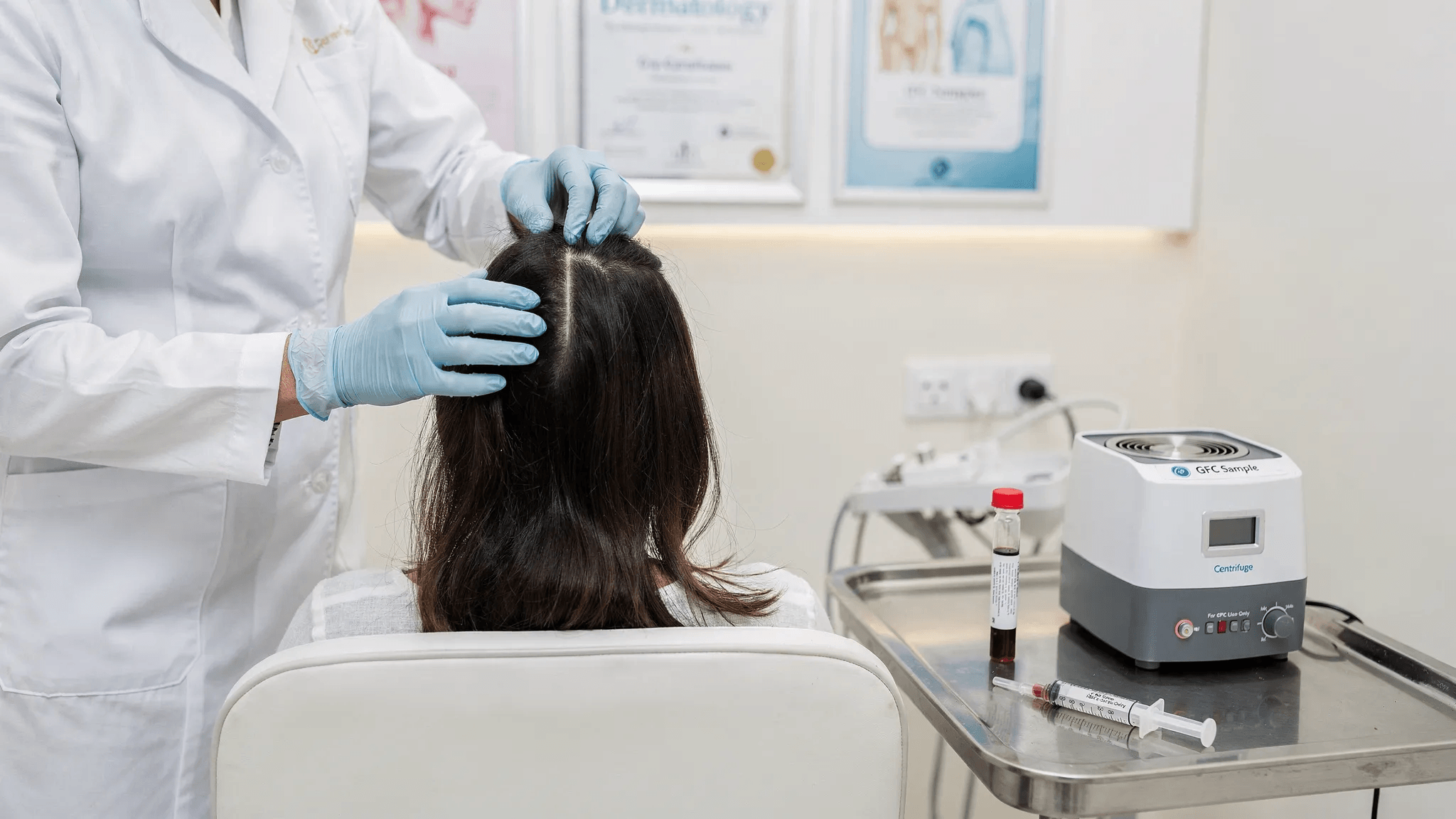
GFC Treatment is an injectable hair and scalp therapy prepared from a small sample of your blood. The blood is processed to isolate a concentrated solution rich in growth factors, which are signaling proteins that help regulate tissue repair, cell communication, and follicle activity.
The prepared concentrate is then injected into targeted areas of the scalp where hair thinning or shedding is noticeable. Unlike topical hair serums that work from the surface, GFC is delivered directly into the scalp environment around weakened hair follicles.
GFC is often compared with PRP, or Platelet-Rich Plasma, because both use the patient’s own blood. However, GFC is typically described as a more refined preparation focused on growth factor concentration. The exact protocol, preparation kit, and session plan can vary by clinic, which is why a consultation with a qualified Dermatologist in Kollam is important.
Key Advantages of GFC Treatment
1. Uses Your Own Blood-Derived Growth Factors
One of the biggest advantages of GFC Treatment is that it is autologous, meaning it is prepared from your own blood. This reduces the risk of allergic reaction compared with many externally sourced or synthetic substances.
Because the treatment uses your body’s biological components, it is often preferred by patients looking for a more natural approach to hair restoration. It does not involve surgery, stitches, or implanted materials.
2. Supports Hair Follicle Strength and Activity
Hair thinning often occurs when follicles become miniaturized, weak, or inactive due to genetics, hormones, stress, nutritional deficiency, inflammation, or medical conditions. GFC may help improve the scalp environment by delivering growth factors that support follicle function.
Patients may notice reduced hair fall first, followed by improvement in hair thickness and visible density over time. Results vary, and GFC works best when the follicles are still alive and capable of responding.
3. Minimally Invasive with Little Downtime
GFC Treatment is performed through small injections into the scalp. Most sessions are completed within a short clinic visit, and many patients return to routine activities soon after.
Mild redness, tenderness, pinpoint swelling, or temporary scalp sensitivity can occur, but these effects usually settle quickly. Your dermatologist may advise avoiding heavy workouts, harsh hair products, oil massage, or chemical hair treatments for a short period after the session.
4. Helpful for Early Hair Thinning
GFC is generally more beneficial in early to moderate hair thinning than in completely bald areas. If hair follicles have been inactive for a long time or scarring is present, injectable regenerative treatments may have limited effect.
This is why early evaluation matters. If you notice sudden shedding, reduced ponytail volume, or a widening hair partition, it is better to consult a dermatologist instead of waiting until the thinning becomes advanced.
According to the American Academy of Dermatology, hair loss can have many causes, including hereditary factors, stress, illness, medications, nutritional deficiency, and scalp disease. A proper diagnosis helps identify whether GFC is appropriate or whether another treatment should come first.
5. Can Be Combined with Other Hair Loss Treatments
Another advantage of GFC Treatment is that it can be part of a broader hair restoration plan. Depending on the diagnosis, a dermatologist may combine it with medical treatments, nutritional correction, scalp care, anti-dandruff therapy, low-level laser options, or post-transplant support.
This combination approach is often more effective than relying on a single treatment. For example, if the underlying cause is androgenetic alopecia, GFC may support follicle health while prescription-based treatments help slow ongoing miniaturization.
GFC Treatment Benefits at a Glance
| Benefit | Why It Matters |
| Non-surgical approach | No cuts, stitches, or transplant procedure required |
| Uses your own blood sample | Lower risk of allergy compared with many external substances |
| Targets thinning zones directly | Growth factors are delivered into the scalp areas that need support |
| Minimal downtime | Most patients resume normal activities quickly |
| Suitable for early thinning | Best when follicles are weak but still active |
| Can complement other therapies | May be included in a dermatologist-led hair restoration plan |
Who Can Benefit from GFC Treatment?
GFC Treatment may be suitable for men and women experiencing early hair thinning, mild to moderate androgenetic alopecia, increased hair shedding, reduced hair density, or post-illness hair fall after medical evaluation. It may also be considered for people who want a non-surgical support option before hair loss becomes severe.
However, it may not be ideal for everyone. People with active scalp infections, certain blood disorders, uncontrolled medical conditions, very advanced baldness, or unrealistic expectations may need alternative treatment options.
A good consultation should include scalp examination, hair pull test if needed, medical history, medication review, and sometimes blood tests for iron, thyroid, vitamin D, B12, and hormonal factors.
What to Expect During a GFC Session
A typical GFC Treatment process begins with consultation and scalp assessment. A small blood sample is collected and processed using a specialized method to isolate growth factors. The scalp is cleaned, and the concentrate is injected into marked thinning areas using fine needles.
The number of sessions varies based on the condition, severity, age, medical history, and response. Many clinics recommend a series of sessions spaced a few weeks apart, followed by maintenance if required. Your dermatologist should explain the expected timeline clearly before treatment.
When Can You See Results?
GFC results are gradual because hair growth follows a biological cycle. Some patients notice reduced shedding within a few weeks, while visible improvement in thickness and density may take several months.
A realistic timeline often looks like this:
| Timeline | Possible Change |
| First few weeks | Reduced shedding in some patients |
| 2 to 3 months | Early improvement in hair texture or scalp coverage |
| 4 to 6 months | More noticeable density changes if treatment is effective |
| Maintenance phase | Results are supported with follow-up care and medical management |
Results are not guaranteed, and response depends on the cause of hair loss, follicle health, genetics, lifestyle, nutrition, and consistency with the treatment plan.
Is GFC Better Than PRP?
GFC and PRP are related regenerative treatments, but they are not identical. PRP contains platelet-rich plasma, while GFC focuses on extracting growth factors in a more concentrated and standardized manner. Some patients prefer GFC because the final preparation may be more refined and may involve fewer inflammatory cells depending on the processing system used.
That said, “better” depends on the patient, the clinic protocol, and the diagnosis. The best choice should be made after examination by a dermatologist rather than based only on online comparisons.
Why Choose a Dermatologist for GFC Treatment in Kollam?
Hair fall is not always cosmetic. It can be linked to thyroid imbalance, anemia, PCOS, dandruff, autoimmune disease, medication use, crash dieting, or stress-related shedding. Choosing a qualified Dermatologist in Kollam helps ensure the root cause is identified before starting injections.
A dermatologist-led plan also improves safety because correct injection depth, sterile technique, scalp diagnosis, session spacing, and aftercare all matter. If you are considering GFC Treatment in Kollam, you can visit TLC Skyn to explore consultation options and discuss whether GFC is suitable for your hair concern.
Frequently Asked Questions
Is GFC Treatment painful?
Most patients feel mild pricking or pressure during the injections. A numbing method may be used to improve comfort, depending on the clinic protocol.
How many GFC sessions are needed?
The number of sessions depends on the severity and cause of hair loss. Many patients require a planned series, followed by maintenance if advised by the dermatologist.
Is GFC Treatment safe?
GFC is generally considered safe when performed by a trained medical professional using sterile methods. Temporary redness, soreness, swelling, or mild bruising may occur.
Can GFC regrow hair on bald patches?
GFC works best where follicles are still active. Completely bald or scarred areas may not respond well and may need other options.
Who should avoid GFC Treatment?
People with active scalp infections, uncontrolled illness, certain blood disorders, or severe untreated medical causes of hair loss should be evaluated carefully before treatment.
Where can I get GFC Treatment in Kollam?
You should choose a clinic where a dermatologist evaluates your scalp, explains your diagnosis, and creates a personalized plan. You can start by visiting TLC Skyn for more information.
Final Thoughts
GFC Treatment offers several advantages for suitable hair loss patients: it is non-surgical, uses your own blood-derived growth factors, involves minimal downtime, and may improve hair fall, thickness, and scalp health over time. However, it is not a one-size-fits-all solution.
The best results come from correct diagnosis, realistic expectations, and a dermatologist-guided treatment plan. If you are considering GFC Treatment in Kollam, schedule a consultation with a qualified dermatologist to understand whether it is the right option for your hair restoration journey. Consulting an experienced skin specialist can also help address related scalp and skin concerns, including finding the right psoriasis treatment in Kollam for long-term scalp and skin health management.