

How to Reduce Underarm Darkness: Causes, Treatments & Prevention
Dark underarms are one of the most common skin concerns dermatologists in Kerala see today, yet most people quietly deal with it for years before asking for help. If you’ve stopped wearing sleeveless tops or feel self-conscious raising your hand in a meeting, you’re not alone – and the good news is that underarm darkening is treatable in most cases.
At TLC Skyn, Kollam’s trusted dermatology and aesthetic clinic led by Dr. Swathy Krishna, we see this concern across all age groups and skin tones. Below is a dermatologist-informed guide covering why underarms darken, what actually works to lighten them, and when it’s time to see a specialist.
What Causes Dark Underarms?
Underarm darkening (medically linked to a form of hyperpigmentation) rarely has a single cause. It’s usually a mix of the following:
- Friction and repeated shaving – Frequent razor use and tight clothing rub against delicate underarm skin, triggering pigment-producing cells to overreact.
- Deodorants and antiperspirants – Certain alcohol and fragrance compounds can irritate the skin, and aluminum salts may build up over time on already-sensitised skin.
- Dead skin cell buildup – Underarms are rarely exfoliated, so dull, thickened skin accumulates and appears darker.
- Acanthosis nigricans – A velvety, darkened patch linked to insulin resistance, obesity, or hormonal conditions like PCOS. This needs medical evaluation, not just cosmetic care.
- Hormonal changes – Pregnancy and hormonal fluctuations can increase melanin production in body folds.
- Sun exposure and genetics – Some skin types are simply more prone to pigmentation, especially Indian and Kerala skin tones, which naturally produce more melanin.
Home Care Tips to Lighten Underarm Skin
For mild, early-stage darkening, small daily changes often make a visible difference within a few weeks:
- Switch to a gentle, aluminum-free deodorant to reduce irritation.
- Exfoliate 1–2 times a week with a mild scrub – never a harsh one, which can worsen pigmentation.
- Reduce shaving frequency; consider trimming or professional hair removal instead.
- Moisturise daily to repair the skin barrier and even out texture.
- Wear breathable, looser-fitting tops to cut down on friction.
These habits help prevent further darkening, but they won’t reverse deep or long-standing pigmentation on their own – that’s where dermatology comes in.
When Home Remedies Aren’t Enough: Professional Treatments
If home care hasn’t helped after 6–8 weeks, or the darkening is thick and velvety rather than just discoloured, a dermatologist can offer faster, more reliable results.
Chemical peels are among the most effective in-clinic options for underarm pigmentation. A dermatologist-administered chemical peel gently exfoliates the top pigmented layers of skin, encouraging fresh, evenly toned skin to surface. Learn more about how peels work for pigmented and tanned skin in our detailed guide on whether chemical peels remove tan.
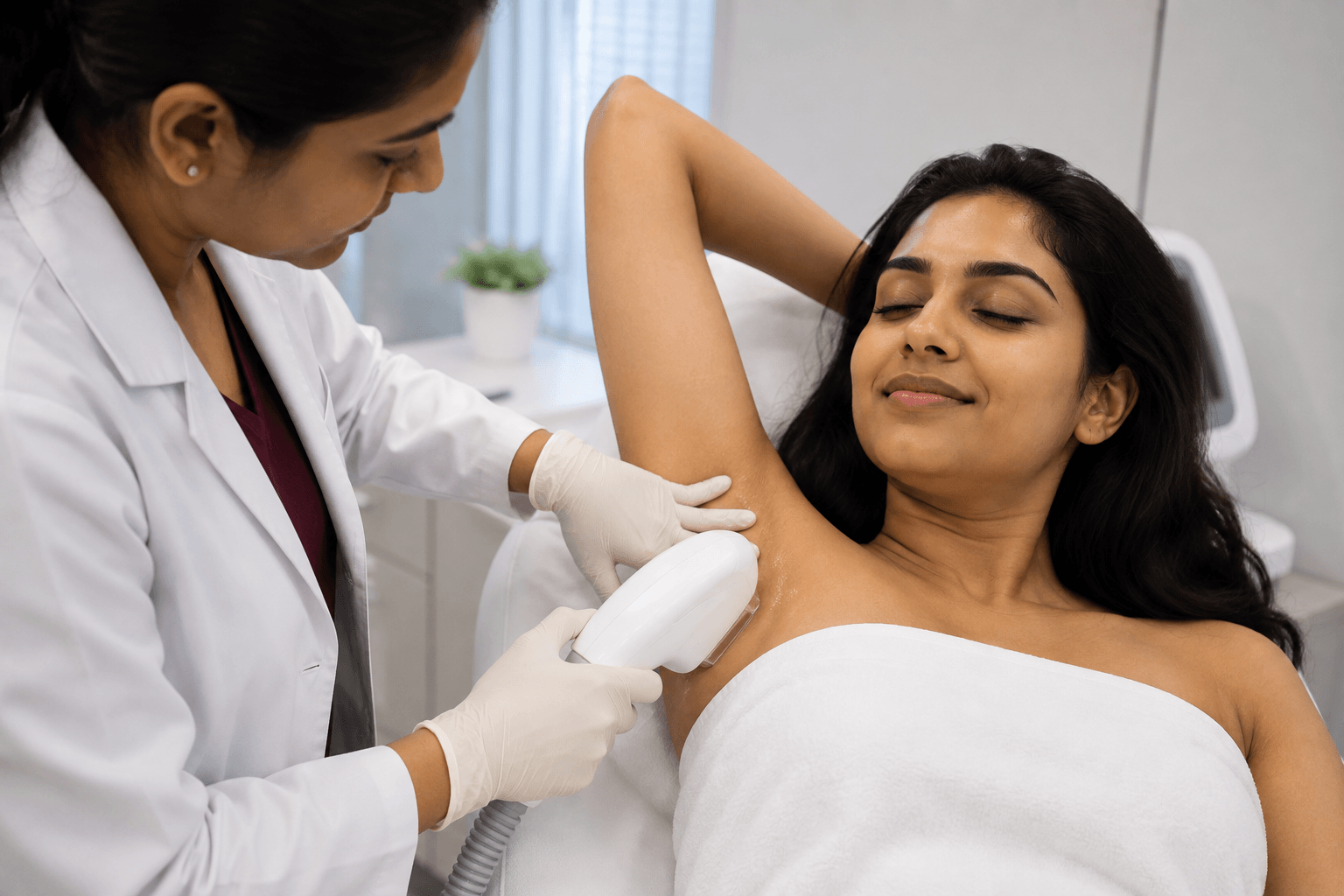
Laser toning targets excess melanin at a deeper level using controlled light energy, making it especially useful for stubborn or long-standing dark patches that haven’t responded to topical care.
Medical-grade brightening actives, prescribed and monitored by a dermatologist, are far safer and more effective than over-the-counter bleaching creams, which can cause irritation and rebound darkening.
If your underarm darkening is part of a broader pigmentation pattern on your face or body, it’s worth understanding how conditions like melasma are diagnosed and treated – our guide on melasma treatment causes, types and solutions explains the dermatologist’s approach in detail.
How TLC Skyn Diagnoses and Treats Underarm Pigmentation
Every underarm pigmentation case at TLC Skyn starts with a proper diagnosis, not a one-size-fits-all cream. Dr. Swathy Krishna examines the pattern and texture of the darkening to rule out conditions like acanthosis nigricans, then builds a plan combining in-clinic procedures with barrier-safe home care. This is the same personalised, evidence-first approach used across our pigmentation treatments at the clinic.
How Long Does It Take to See Results?
Most people notice visible improvement in underarm tone within 4–6 weeks of starting a proper treatment plan, with fuller results over 3–4 months depending on how deep and long-standing the pigmentation is. Consistency – with both clinic sessions and daily home care – matters more than intensity.
Prevention Tips for the Long Run
- Choose sulfate- and alcohol-free deodorants.
- Apply a broad-spectrum sunscreen if underarms are exposed.
- Avoid harsh scrubbing or DIY bleaching hacks.
- Get hormonal or weight-related causes checked if darkening appears suddenly and looks thickened.
Frequently Asked Questions
Can dark underarms be completely cured?
Most cases improve significantly with consistent treatment, though genetic or hormonal pigmentation may need ongoing maintenance.
Are dark underarms a sign of diabetes?
Velvety, thickened dark underarms can indicate insulin resistance and should be checked by a doctor.
Is laser treatment safe for underarm darkening?
Yes, when performed by a qualified dermatologist using skin-appropriate settings.
Do home remedies like lemon actually work?
They rarely help and can irritate or further darken sensitive underarm skin.
How soon will I see results from a chemical peel?
Many patients notice brighter, more even tone after 2–3 sessions spaced a few weeks apart.
Should I stop shaving to reduce darkness?
Reducing razor frequency helps, but you don’t need to stop entirely – switching methods often helps more.