

How Can I Get Rid of Acne Scars and Marks?
You went through it – the breakouts, the products that didn’t work, the ones that kind of did, and eventually, somehow, the active acne settled down. That part of the journey ended.
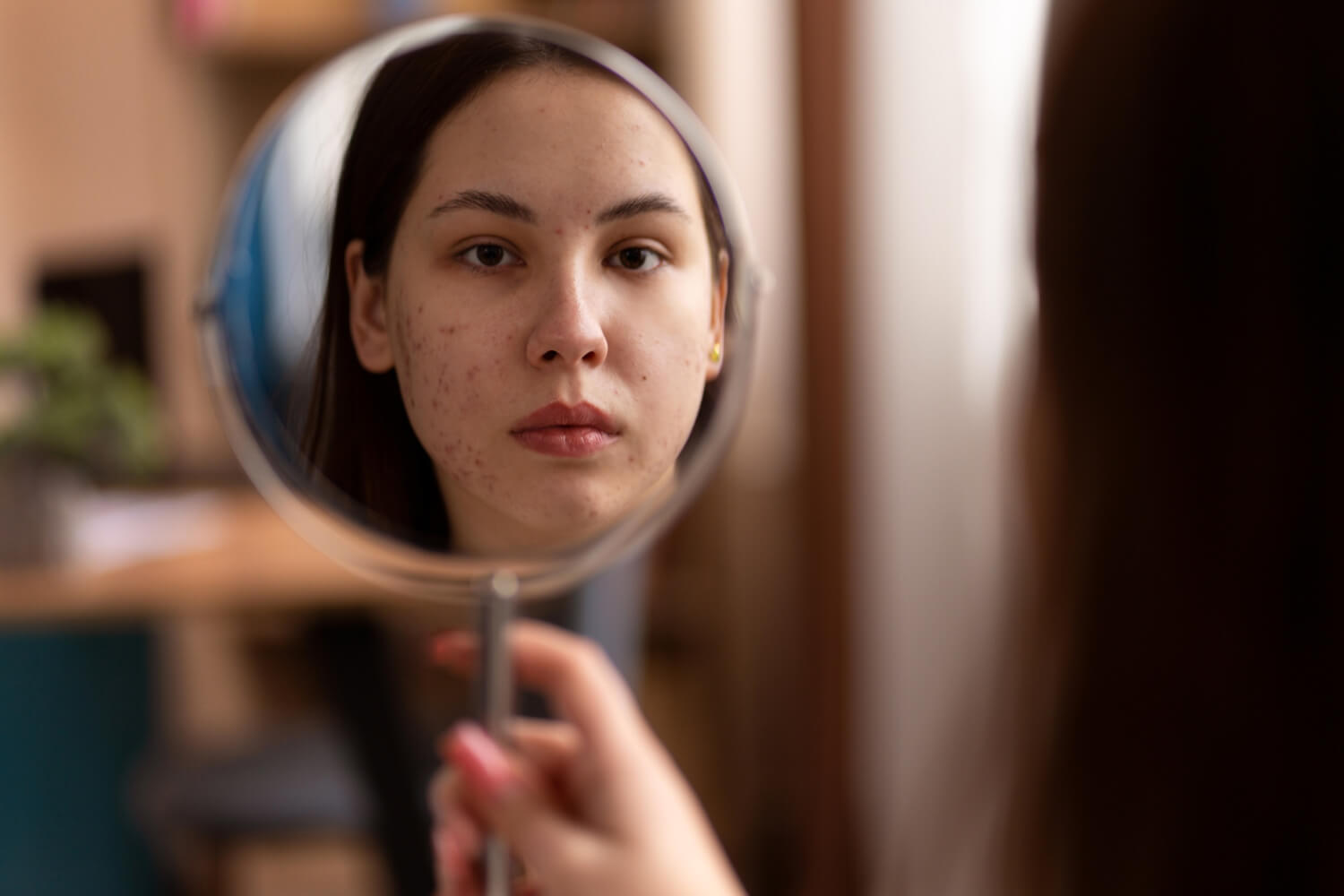
But you looked in the mirror and noticed that the skin didn’t go back to what it was before. There were marks. Dark patches. Some spots that looked almost like little dents. And a texture that felt nothing like the skin you remembered.
Sound familiar? You’re definitely not the only one dealing with this.
At TLC Skyn in Kollam, we see this all the time: people who’ve finally got their acne under control, often after seeking acne treatment in Kollam, only to find themselves frustrated by what it left behind. The scars and marks can honestly feel harder to deal with than the acne itself, partly because they’re so visible even when your skin is otherwise calm, and partly because nobody really warned you they’d stick around this long.
The good news and there genuinely is good news, is that in 2026, there are real, effective options. This isn’t about miracle creams or overnight fixes. It’s about understanding what’s actually happening on your skin and choosing the right approach for it.
Not All Post-Acne Marks Are the Same Thing
This is probably the most important thing to understand before anything else. A lot of people use acne scars as a catch-all term, but what they’re looking at could be very different things and they need very different treatments.
The Marks That Fade (Given Time and the Right Help)
If what you’re seeing is flat – no change in texture, just colour – that’s likely a post-inflammatory mark, not a true scar. These come in two types:
- PIH (Post-Inflammatory Hyperpigmentation): The brown or dark patches that show up after a pimple heals. Extremely common in people with deeper skin tones, including most people in Kerala and across South India.
- PIE (Post-Inflammatory Erythema): More of a pinkish-red flat mark, usually more noticeable in lighter skin.
These aren’t permanent. They do fade – though without treatment, it can take longer than most people have patience for.
The Marks That Are Actually Structural
Then there are the true scars. These happen when deep, inflamed acne – the cystic kind, the ones that hurt – damages the collagen beneath the skin. When that collagen doesn’t repair evenly, the skin surface changes shape. Too little collagen and you get depressions; too much and the scar raises up.
The main types you’ll encounter:
- Ice Pick Scars – Deep, narrow, like a pin was pressed into the skin. The hardest type to treat.
- Boxcar Scars – Wider depressions with relatively sharp edges. Very common on the cheeks.
- Rolling Scars – Give skin that uneven, slightly wavy look. Usually respond well to collagen-stimulating treatments.
- Hypertrophic or Keloid Scars – Raised and firm. Less common with facial acne but more likely in people genetically prone to keloids.
Knowing which type you’re dealing with shapes everything about treatment. That’s why a consultation with a dermatologist at TLC Skyn is always the right starting point – not guesswork.
Why the Home Remedies Aren’t Working
Be honest – you’ve tried things. Probably a lot of things. Vitamin C serums. Turmeric. Aloe vera. Maybe a Niacinamide product someone recommended on Instagram. Some of it helped a little with the dark marks. Most of it didn’t do much for the actual texture.
Here’s why. True acne scars live in the dermis – a deeper layer of skin that topical products simply can’t reach effectively. When a scar is structural, the skin’s surface is literally shaped differently. No cream can rebuild that collagen from the outside.
That’s not to say topical ingredients are useless. Retinoids genuinely support skin cell turnover and can fade mild pigmentation. Vitamin C helps brighten PIH. Azelaic acid is particularly good for brown marks in darker skin tones. But these work best as maintenance and support – not as primary scar treatment.
For anything beyond flat discolouration, you need something that works deeper.
What Actually Works: Treatments at TLC Skyn, Kollam
Chemical Peels – More Than Just Exfoliation
A chemical peel isn’t the harsh, skin-stripping procedure some people imagine. When done properly by a trained dermatologist, it’s a controlled process – a medically-formulated acid solution is applied to remove damaged outer skin layers and trigger fresh collagen production underneath.
For PIH and mild boxcar scars, peels can make a really noticeable difference over a series of sessions. For people in Kollam and South Kerala dealing with post-acne dark marks on deeper skin tones, chemical peels are one of the most targeted options available. Glycolic, lactic, and TCA peels are selected based on your specific skin tone and concern.
Microneedling – Letting the Skin Rebuild Itself
Microneedling works by creating very fine, controlled micro-channels in the skin using tiny sterile needles. It sounds uncomfortable but it’s generally well-tolerated, and what it triggers is worth it – the skin’s own healing response kicks in and starts producing new collagen where it’s needed.
Over several sessions, rolling scars smooth out, skin texture improves noticeably, and the depth of atrophic scars reduces. One reason microneedling is so popular for Indian skin types is that it doesn’t carry the same pigmentation risk that some laser treatments can. At TLC Skyn, it’s part of the core acne scar treatment protocol and is often combined with other treatments for better outcomes.
Laser Resurfacing – For Deeper, More Stubborn Scars
Laser treatments go further than microneedling can, using focused light energy to remodel collagen at a deeper tissue level. For moderate-to-severe ice pick and boxcar scars, this is often the most effective option.
Getting laser treatment right on darker Indian skin tones requires a dermatologist who understands how melanin responds to laser energy – the wrong settings can cause new pigmentation issues. This is not a treatment to seek out at a general beauty clinic.
GFC Therapy – Your Own Biology, Working for You
GFC (Growth Factor Concentrate) treatment uses growth factors extracted from your own blood to accelerate the skin’s repair process. Applied after microneedling, it supercharges the collagen response and speeds up visible improvement. Because it uses your own biological material, it’s naturally compatible with all skin types and has a strong safety profile.
Treating Open Pores Too
Acne often leaves open pores behind – the pore structure can stretch or distort during breakouts and not spring back fully on its own. At TLC Skyn, pore treatment runs alongside scar treatment for a more complete result.
Quick Treatment Comparison
| Treatment | Best For | Sessions Needed | Downtime |
|---|---|---|---|
| Chemical Peel | Dark marks, mild scars | 4–6 | Minimal to moderate |
| Microneedling | Rolling and boxcar scars | 4–6 | 24–48 hrs redness |
| Laser Resurfacing | Deeper or stubborn scars | 3–5 | 3–7 days |
| GFC Therapy | Collagen regeneration | 3–4 | Minimal |
| Topical Retinoids | Mild PIH, surface marks | Ongoing | Minimal |
One Thing That Matters More Than Any Treatment
Don’t pick. Seriously.
Squeezing or picking at pimples pushes bacteria deeper, prolongs inflammation, and makes scarring significantly more likely. It’s the single easiest way to turn a breakout that might have healed cleanly into a scar that stays for years.
Beyond that – sunscreen every single day. UV exposure darkens existing marks and slows down pigmentation healing considerably. SPF 30 or higher, daily, regardless of whether you’re spending the day outside or mostly indoors.
And if you still have active acne alongside scarring, addressing the acne first is always the priority. Treating scars on skin that’s still actively breaking out doesn’t work – you need a stable foundation before any resurfacing treatment can do its job properly.
Frequently Asked Questions
Q1. Can acne scars be completely removed?
Structural scars are permanent changes to the dermis, so “complete removal” isn’t always realistic – but significant improvement is. Most people see 50 to 80% or more reduction in visibility with a proper treatment plan. For many, that’s enough to feel genuinely different about their skin.
Q2. How long before I see results?
Dark marks – PIH and PIE – can start improving within 4 to 12 weeks of consistent treatment. Structural scars take longer, anywhere from 3 to 12 months, because you’re waiting on collagen to remodel. Multiple sessions are part of the process.
Q3. Are these treatments safe for South Indian skin?
Yes, absolutely – when done by a dermatologist experienced with melanin-rich skin. Microneedling and chemical peels are especially well-suited. Laser treatments work too, but require careful calibration of settings. This is where choosing the right clinic really matters.
Q4. What’s the actual difference between a mark and a scar?
A mark is flat – just a change in colour, no change in skin texture. It’s temporary. A scar changes the shape of the skin – a pit, depression, or raised bump. That’s a structural change that requires treatment to address properly.
Q5. Do I need to stop my active acne first before treating scars?
Yes. Always. Doing resurfacing procedures on skin with active inflammation can make things worse. Your dermatologist at TLC Skyn will map out the right sequence for your skin specifically.
Q6. Where can I get acne scar treatment in Kollam?
TLC Skyn in Kollam offers the full range – chemical peels, microneedling, GFC therapy, laser treatments, and personalised scar treatment plans under qualified dermatological care.
The Scars Don’t Have to Be the End of the Story
Acne does a number on your skin. And then sometimes it leaves behind evidence. But that evidence isn’t fixed – not in 2026, with everything that’s now available.
Whether it’s flat dark marks that just won’t budge, or textural changes that make you want to avoid certain lighting – there’s a path forward. It takes the right assessment, the right treatment, and a bit of patience. But the skin you want isn’t out of reach.
Book a consultation at TLC Skyn in Kollam, and let’s figure out what your skin actually needs.