

Can Dandruff Cause Acne? Causes, Symptoms and Treatment Options
You wash your face every day. You follow a routine. Yet the breakouts keep coming back especially around your forehead and the sides of your face. Sound familiar? If you also struggle with dandruff, the two might be more connected than you think.
Can dandruff cause acne? The answer is yes and the link runs deeper than most people realise. In 2026, more dermatologists are recognising this as a genuine clinical concern, not just a coincidence. In this blog, our skin specialists at TLC Skyn, Kollam break down the science behind it, the symptoms to look out for, and how to treat both effectively.
What Is the Connection Between Dandruff and Acne?
Dandruff and acne share a common root cause: excess oil production. Both conditions are triggered when your skin’s sebaceous glands overproduce sebum -the natural oil that keeps skin moisturised. When this oil goes into overdrive, it sets the stage for two distinct but related problems. If you’re dealing with both at the same time, seeking professional acne treatment in Kollam at the right stage can prevent long-term skin damage and recurring breakouts.
In dandruff, a naturally occurring fungus called Malassezia globosa breaks down the excess sebum on your scalp. This process releases oleic acid, which irritates the scalp in people who are sensitive to it -causing the characteristic flaking, itching, and inflammation we call dandruff (medically known as seborrheic dermatitis).
In acne, the same excess oil combines with dead skin cells and debris to block pores. Bacteria trapped inside those pores trigger inflammation, leading to whiteheads, blackheads, and pimples.
So when dandruff is active on your scalp, flakes can migrate to your forehead, temples, cheeks, and even your back -depositing oil, dead skin cells, and Malassezia spores that contribute directly to acne breakouts in those areas. This is also why many patients ask how long does it take for acne treatment to work – because dandruff driven acne often takes longer to clear than typical breakouts, since the scalp trigger remains active until it is treated directly.
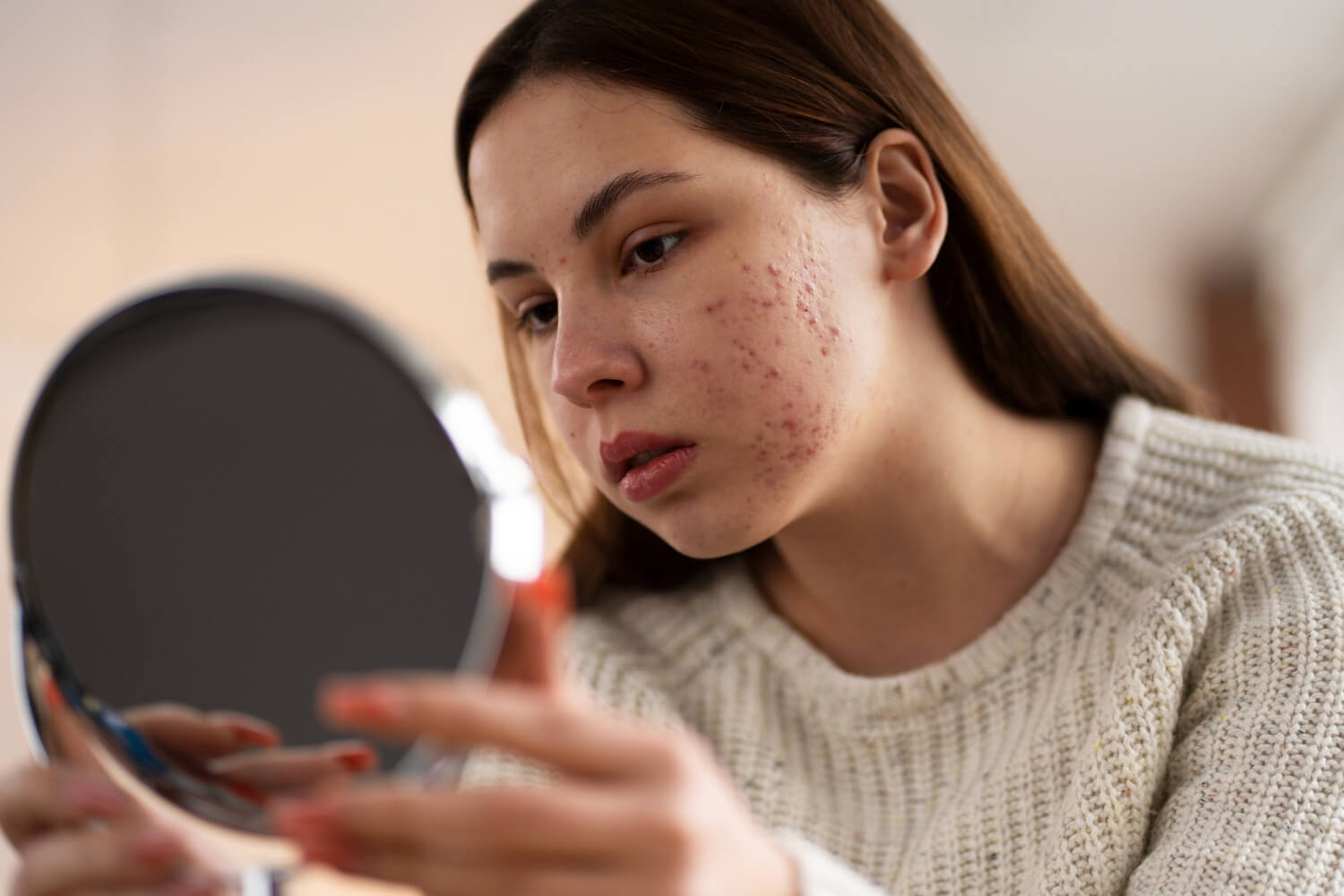
How Exactly Does Dandruff Trigger Acne?
Here’s the step-by-step process:
- Scalp flaking begins – Dead, oily skin cells shed from the scalp as visible flakes.
- Flakes fall onto facial skin – Gravity and hair contact transfer flakes to the forehead, nose bridge, cheeks, and jawline.
- Pores get blocked -The oil-coated flakes settle into open pores on the face, combining with your skin’s own sebum and dead cells.
- Bacteria and fungus act -The blocked environment becomes a breeding ground for acne-causing bacteria (Cutibacterium acnes) and fungal activity.
- Inflammation develops -The result is the kind of persistent, recurrent acne that doesn’t fully clear until the underlying dandruff is treated.
This is why many patients with stubborn forehead and hairline acne find little relief from topical acne treatments alone the root cause is still active on their scalp.
Symptoms: Is Your Acne Being Caused by Dandruff?
Many patients don’t realise that dandruff can cause acne until they notice a pattern -breakouts that flare up whenever their scalp gets worse. These symptoms can help you identify whether that’s what’s happening to your skin:
- Acne concentrated along the forehead, temples, and hairline
- Breakouts that worsen when dandruff flares up
- Oily scalp accompanying oily facial skin
- Pimples that appear on your upper back and chest (where dandruff flakes fall)
- Redness or flaking at the eyebrows, sides of the nose, or behind the ears (signs of facial seborrheic dermatitis)
- Acne that keeps returning despite regular skincare and no dietary triggers
If you recognise several of these signs, it’s worth getting a professional assessment. Our dermatologists at TLC Skyn can examine both your scalp and skin to identify whether seborrheic dermatitis is driving your breakouts.
Where Does Dandruff-Related Acne Appear?
Unlike hormonal or dietary acne that tends to cluster on the chin and jaw, dandruff-related acne follows the path of falling flakes:
- Forehead – the most common site, directly below the scalp
- Temples and hairline – where hair contact is most frequent
- Nose and cheeks – facial seborrheic dermatitis can extend here
- Upper back and shoulders – especially in people with long hair
- Chest – less common but possible
Treatment Options: Tackling Dandruff and Acne Together
The key insight here is that treating only the acne won’t give lasting results – you need to address the dandruff simultaneously.
1. Treat the Scalp First
Start with a medicated shampoo containing active ingredients proven to control Malassezia and scalp inflammation:
- Ketoconazole – antifungal that directly targets the fungus driving dandruff
- Zinc pyrithione – antibacterial and antifungal, reduces flaking
- Salicylic acid – exfoliates dead skin cells from the scalp
- Selenium sulfide – controls yeast overgrowth effectively
- Coal tar – slows excessive skin cell turnover and reduces irritation
Use medicated shampoo at least twice a week, and leave it on the scalp for 3–5 minutes before rinsing for maximum effect.
2. Targeted Acne Treatment for Affected Areas
Once the scalp is treated, address the acne on your face with proven topical treatments. Depending on severity, our dermatologists may recommend:
- Topical retinoids – to regulate skin cell turnover and prevent clogged pores
- Benzoyl peroxide – reduces acne-causing bacteria on the skin surface
- Niacinamide – controls excess oil production and calms inflammation
- Azelaic acid – effective against both acne and post-breakout pigmentation
For persistent or severe cases, our experts may recommend in-clinic procedures like chemical peels or acne scar treatments once active breakouts are controlled.
3. In-Clinic Treatments at TLC Skyn, Kollam
When over-the-counter products aren’t enough, professional dermatological care makes a significant difference. At TLC Skyn, we offer:
- Medical-grade chemical peels – to deeply exfoliate and decongest pores
- GFC Therapy for scalp health – to restore scalp balance and reduce hair-triggering inflammation
- Microneedling RF – for acne scar revision once active acne is cleared
- Customised prescription plans -combining topical, oral, and procedural care for long-term remission
Our dandruff treatment programme addresses both scalp and skin simultaneously -targeting the cycle at its source rather than just managing symptoms.
4. Skincare Habits That Help
- Wash your hair regularly – don’t let scalp oil and flakes accumulate
- Keep hair away from your face – tie hair back, especially during sleep
- Change pillowcases frequently – dandruff flakes transfer onto fabric and back to skin
- Avoid heavy, pore-clogging hair products – oils and serums that drip onto the face can worsen breakouts
- Use a gentle, non-comedogenic moisturiser – keeping skin hydrated reduces the compensatory oil surge that feeds acne
- Don’t pick or scratch – this spreads bacteria and fungal spores to new areas
When Should You See a Dermatologist?
Home remedies and OTC shampoos can provide temporary relief, but if your dandruff-related acne is:
- Covering large areas of the face or body
- Leaving behind dark spots or acne scars
- Recurring every month despite treatment
- Accompanied by significant scalp itching, redness, or hair thinning
-it’s time to consult a qualified skin specialist. Untreated seborrheic dermatitis can progress and worsen both scalp and skin conditions over time.
Book a consultation at TLC Skyn, Kollam and get a personalised plan that treats both your dandruff and acne together, not separately.
Frequently Asked Questions
Can dandruff directly cause acne on the face?
Yes dandruff can cause acne by depositing oil, dead skin cells, and fungal spores onto facial pores, triggering persistent breakouts especially along the forehead and hairline.
Is forehead acne always caused by dandruff?
Not always, but if your forehead acne is persistent and accompanied by dandruff, the two are very likely connected.
Can treating dandruff clear my acne?
Treating dandruff removes the primary trigger, which often significantly improves facial acne but a combined treatment plan targeting both scalp and skin delivers the best results.
What type of acne does dandruff cause?
Dandruff-related acne typically presents as whiteheads, blackheads, and inflammatory pimples concentrated near the hairline and forehead.
Does shampooing more often help reduce acne?
Washing your hair regularly with a medicated shampoo reduces scalp oil and flaking, which in turn reduces the transfer of acne-triggering material to the face.
Can dandruff cause acne on the back?
Yes dandruff flakes falling onto the upper back and shoulders can cause “bacne” in the same way they trigger facial breakouts.
Is seborrheic dermatitis the same as dandruff?
Seborrheic dermatitis is the medical condition of which dandruff is the most common and mild manifestation. In more severe forms, it can affect the face, ears, and chest.
Should I see a dermatologist for dandruff and acne together?
Yes, a dermatologist can assess both conditions, confirm whether they are connected, and prescribe a targeted treatment plan that addresses both simultaneously.
We Also Offer Advanced Skin & Aesthetic Treatments
At TLC Skyn, we offer a comprehensive range of dermatology and aesthetic treatments to help you achieve healthier, more confident skin. In addition to expert care for acne, dandruff-related skin concerns, and scalp conditions, we provide advanced lip pigmentation treatment guide to restore the natural colour of dark or unevenly pigmented lips. Our clinic also specializes in skin tag removal using safe and minimally invasive techniques, as well as laser hair removal in Kollam for long-lasting hair reduction on the face and body. If you’re looking for the best skin doctor in Kollam, our experienced Lady Skin Specialist in Kollam delivers personalized treatment plans using modern technology to achieve safe, effective, and natural-looking results.
Final Word
Dandruff and acne are both common, but when they occur together, it’s rarely a coincidence. The shared mechanism of excess oil, skin cell buildup, and microbial activity means that treating one without the other often leaves you stuck in a frustrating cycle of recurring breakouts.
At TLC Skyn, Kollam, our expert dermatologists assess the full picture scalp health, skin type, and breakout pattern to create a treatment plan that addresses both conditions at their root. Whether you need prescription-strength scalp care, advanced acne treatment, or in-clinic procedures, we have the expertise to guide your skin back to health.