

Does Lack of Sleep Cause Hair Loss? Myths vs Facts
Sleep is often treated like a luxury, but in dermatology it is a body-wide repair signal. So when people notice extra hair on the pillow after a few rough weeks, the question becomes urgent: Does Lack of Sleep Cause Hair Loss or is it just another internet myth?
At TLC Skyn, we see a clear pattern: poor sleep rarely acts as the only cause, but it can strongly trigger, worsen, or prolong certain types of shedding, especially when stress, low iron, thyroid imbalance, crash dieting, or a new illness is also present.
For men experiencing thinning hair, understanding how to prevent hair loss in men is equally important. Consistent sleep, a nutrient-rich diet, stress management, regular exercise, and timely treatment of underlying scalp or health conditions can help protect hair health. Early intervention with dermatologist-recommended treatments such as Minoxidil, PRP, or GFC therapy may also slow hair loss and support stronger hair growth. By addressing sleep quality alongside other risk factors, men can significantly reduce the chances of progressive hair thinning and excessive shedding.
Quick hair science in simple words so the myths make sense
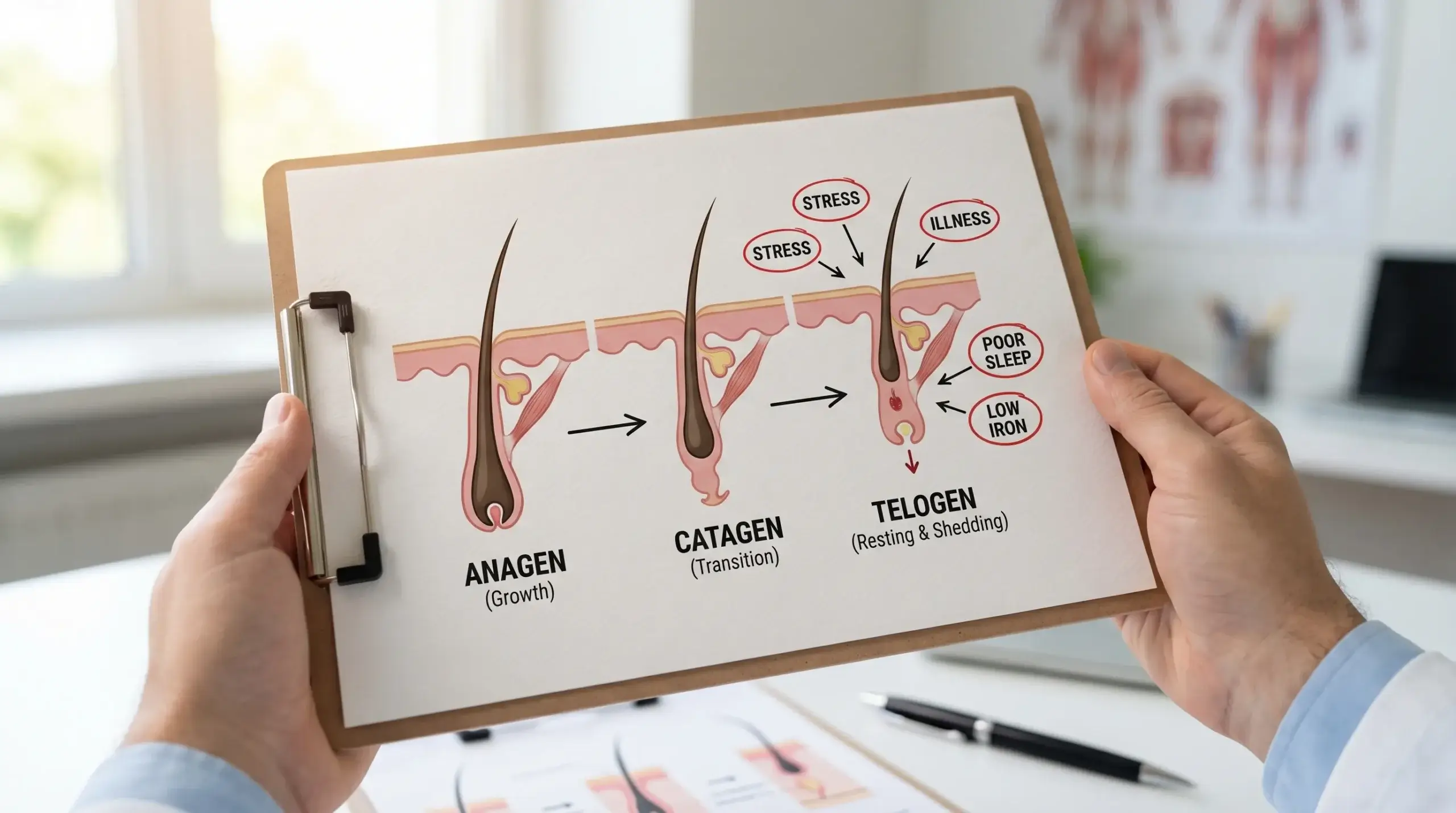
Your hair grows in a cycle:
- Anagen: growth phase (lasts years)
- Catagen: transition phase (weeks)
- Telogen: resting and shedding phase (months)
A healthy scalp always sheds some hair. The concern is when a higher number of hairs shift into telogen together, leading to noticeable thinning. That common sudden shedding pattern is called telogen effluvium. For accurate diagnosis and personalized care, visiting the best skin clinic Kollam can help identify triggers and guide effective treatment.
Myths vs facts: what sleep can and cannot, do
Here is a practical “truth table” you can use.
| Claim | Reality | What it means for you |
| One week of late nights will make you bald. | Myth | Hair cycles change slowly. One bad week is unlikely to cause visible thinning by itself. |
| Poor sleep can trigger shedding. | Fact | Sleep loss can raise stress hormones, worsen inflammation, and disrupt recovery, which can contribute to telogen effluvium. |
| If I sleep 8 hours, my genetic hair loss will stop. | Myth | Androgenetic hair loss needs targeted treatment. Sleep helps overall health, but it is not a stand-alone cure. |
| Fixing sleep can improve results from treatment. | Fact | Better sleep supports consistency, stress control, and scalp recovery, which can improve outcomes over time. |
What the data says actionable, not scary
Two widely accepted signals matter here:
- Many adults do not sleep enough. The CDC notes that 1 in 3 adults report short sleep duration, which is linked with broader health stressors that can also show up in skin and hair.
- Chronic stress affects hair cycling. Sleep loss and stress often move together, and stress is a known trigger for telogen effluvium and can flare conditions like seborrheic dermatitis (which can worsen shedding).
If you want a simple way to treat this like a “personal experiment,” use a 30 day tracking approach.
A simple 30 day tracker chart (you can copy this)
Use a 0-10 score daily.
| Metric | 0 | 10 |
| Sleep quality | Very poor | Excellent |
| Stress level | Calm | Very stressed |
| Shedding level (shower/comb) | Low | Very high |
| Scalp symptoms | None | Itchy, oily, flaky, sore |
After 30 days, patterns become obvious. Many patients learn a key lesson: shedding spikes often follow 2-8 weeks after a stressful period, not immediately.
For sleep guidance, you can also refer to the CDC sleep recommendations.
So, does lack of sleep cause hair loss?
Yes, it can contribute, but usually as a multiplier rather than a single root cause.
Think of sleep like the foundation of a building:
- If the foundation is weak, small problems (mild iron deficiency, dandruff inflammation, hormonal shifts) can start to show.
- If the foundation is strong, you may still have issues, but recovery is faster and treatment works more smoothly.
The 4 main ways poor sleep can affect hair
- Higher stress hormones: Poor sleep can increase stress responses, which may push more hairs into the shedding phase.
- More inflammation: Bad sleep is linked with higher inflammatory signals in the body, which can aggravate scalp conditions.
- Lower repair time: Hair follicles are active mini organs. They benefit from steady recovery routines.
- Behavior loop: When people are tired, they skip meals, miss protein, forget supplements, smoke more, or overuse caffeine, all of which can worsen shedding.
When sleep is the main problem, and when it is not
Use this comparison to decide what to do next.
| Pattern you notice | More likely cause | Best next step |
| Sudden heavy shedding after exams, travel, fever, emotional stress, or weeks of poor sleep | Telogen effluvium | Check triggers, do basic blood tests, improve sleep, consult a dermatologist |
| Gradual thinning at the front or crown over years, family history | Androgenetic hair loss | Start evidence-based hair loss treatment early |
| Patchy hair loss in round spots | Alopecia areata | Dermatologist evaluation needed |
| Breakage, frizz, short snapped hairs | Hair shaft damage | Hair care changes plus scalp check |
Trends and real investor examples: why sleep and hair is a serious health category now
This topic is trending for a reason: wellness has moved from beauty talk to measurable habits.
- Wearables and sleep tracking went mainstream. Major consumer brands have made sleep scores a daily metric, so people now connect poor sleep with visible issues like dull skin and shedding.
- Investment has followed behavior. Public market and venture activity has consistently favored “trackable wellness” categories, including sleep tech and direct-to-consumer hair loss care. The big lesson from investors is simple: people spend on what they can measure and improve.
A practical takeaway : if you already track steps or calories, add sleep and shedding for 30 days. That single change often improves how quickly a dermatologist can identify patterns and choose the right plan.
What to do if you suspect sleep-related shedding
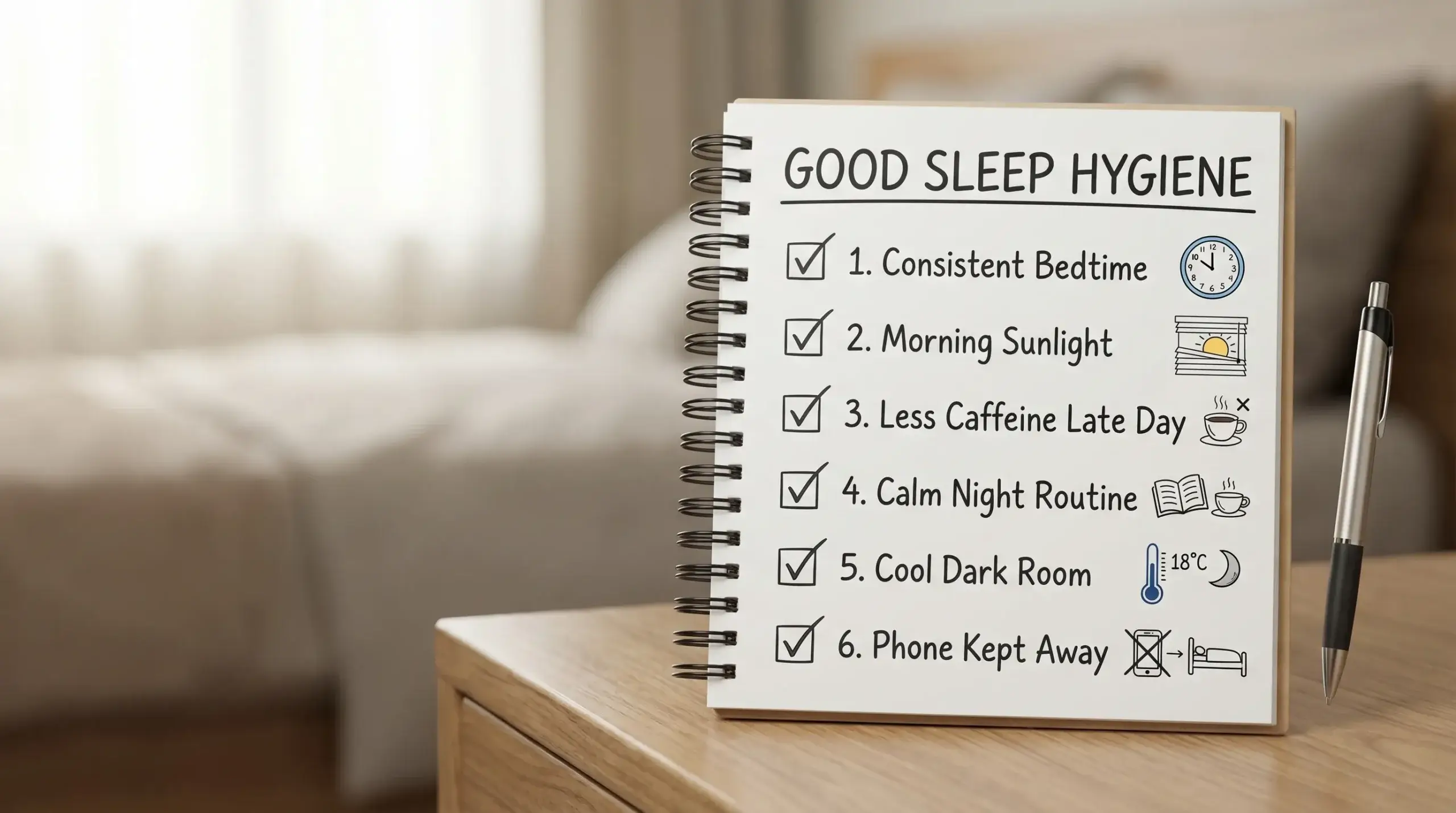
Step 1: Fix the basics for 4 weeks
Keep it simple:
- Aim for a consistent sleep and wake time.
- Reduce caffeine after midday.
- Get morning light exposure.
- Avoid very late intense workouts.
- Do not start multiple new hair oils and shampoos at the same time. It confuses the results.
Step 2: Rule out common medical causes
Even if the trigger was sleep loss, shedding often overlaps with correctable issues. A dermatologist may suggest tests like:
- CBC (anemia)
- Ferritin (iron stores)
- Thyroid profile
- Vitamin D and B12 (based on your symptoms and diet)
Step 3: Start the right hair loss treatment not random products
If shedding is persistent, or you see patterned thinning, you may need a plan that can include:
- Diagnosis by scalp exam and dermoscopy
- Medical topical treatments where appropriate
- Procedures depending on the cause
- Scalp care for dandruff or inflammation
If you are looking for hair loss treatment in Kollam, it is worth choosing a clinic where you can meet a dermatologist in Kollam or a qualified skin specialist in Kollam who can identify the type of hair loss first, before you spend money on trial-and-error.
When to book an appointment urgently
Consider faster evaluation if you have:
- Sudden patchy hair loss
- Scalp pain, pus, thick scaling, or bleeding
- Hair loss with weight change, fatigue, or irregular periods
- Rapid thinning over a few months
Frequently Asked Questions
Does Lack of Sleep Cause Hair Loss in everyone?
Not everyone. Poor sleep can increase the risk of shedding, but many people only notice hair fall when other triggers (stress, illness, low iron) happen at the same time.
How long after poor sleep will hair shedding start?
Often delayed. Many people see increased shedding 2 to 8 weeks after a stressful or sleep-deprived period, because hair cycling takes time.
Can sleeping more regrow lost hair?
Better sleep supports recovery, but regrowth depends on the cause. Telogen effluvium often improves with time and trigger control. Genetic thinning usually needs targeted hair loss treatment.
What is the best hair loss treatment in Kollam if my hair fall is due to stress and sleep loss?
The best plan starts with diagnosis. Many cases improve with trigger control, scalp care, and correcting deficiencies. A dermatologist can confirm whether it is telogen effluvium or another condition.
Should I see a dermatologist in Kollam for hair fall, or can I try home remedies first?
If shedding is heavy, lasts more than 6 to 8 weeks, or you see thinning areas, it is smart to consult a dermatologist early. It saves time and cost.
Can dandruff get worse with poor sleep and increase hair fall?
Yes. Poor sleep can worsen inflammation and stress, which may aggravate dandruff and scalp itching. Treating scalp inflammation can reduce breakage and shedding.
Talk to TLC Skyn
If you are worried about hair fall and sleep has been poor recently, a focused evaluation can make things clearer quickly. TLC Skyn can help you identify the type of hair loss, check likely triggers, and plan the right next steps based on your scalp and history.
Book a consultation through TLC Skyn to discuss diagnosis and treatment options with a qualified skin and hair team.
We also provide advanced aesthetic and hair care services, including GFC Treatment, Hair Thinning Treatment, Lip Micropigmentation Treatment, and Microblading Treatment, all tailored to enhance your natural look and confidence.